If you love vintage, quality furniture, and modern antiques that tell a story, you probably aren’t sure what to name your style because so many different things fascinate you.
Furniture is not just about furniture, but about atmosphere, details and materials that speak about you. Building your personal style is a journey, and, to provide you with some inspiration, we have selected five very interesting furniture styles for you to explore (especially if you love vintage Scandinavian furniture).
Japandi: the perfect balance between Japan and Scandinavia 1.
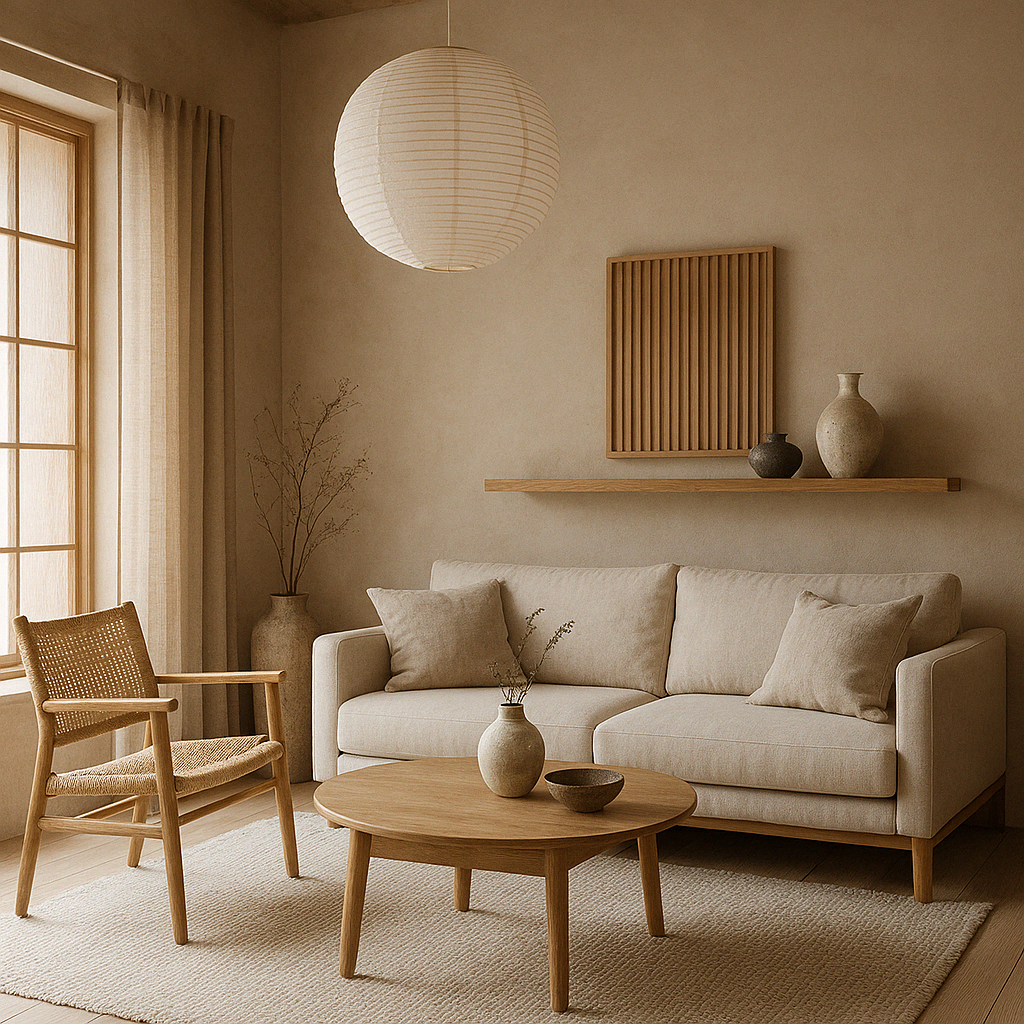
The Japandi is a style of furniture that combines Japanese minimalism with Nordic design, creating spaces that are functional, elegant and, above all, cozy.
The fusion of the essentiality and elegance of Japan and the warmth and serenity of Northern Europe creates a relaxing and uncluttered atmosphere in which each element has its own space and function.
Neutral colors, natural materials such as wood and linen, and clean lines are the main ingredients of this look.
The Japanese philosophy of the ma (empty space), which values absence, fits perfectly with the Scandinavian concept of lagom, the right balance between functionality and comfort.
The real heart of Japandi is the concept of Wabi-Sabi, which celebrates imperfection and the signs of time and invites us to unearth beauty in simple, natural things.
How is it created?
- Light or dark natural wood with prominent grain.
- Cotton and linen fabrics for curtains and pillows.
- Rough stone and handmade ceramics.
- Bamboo and rice paper for lamps and decorations.
2. Scandinavian-Eclectic: a bold and cosmopolitan style
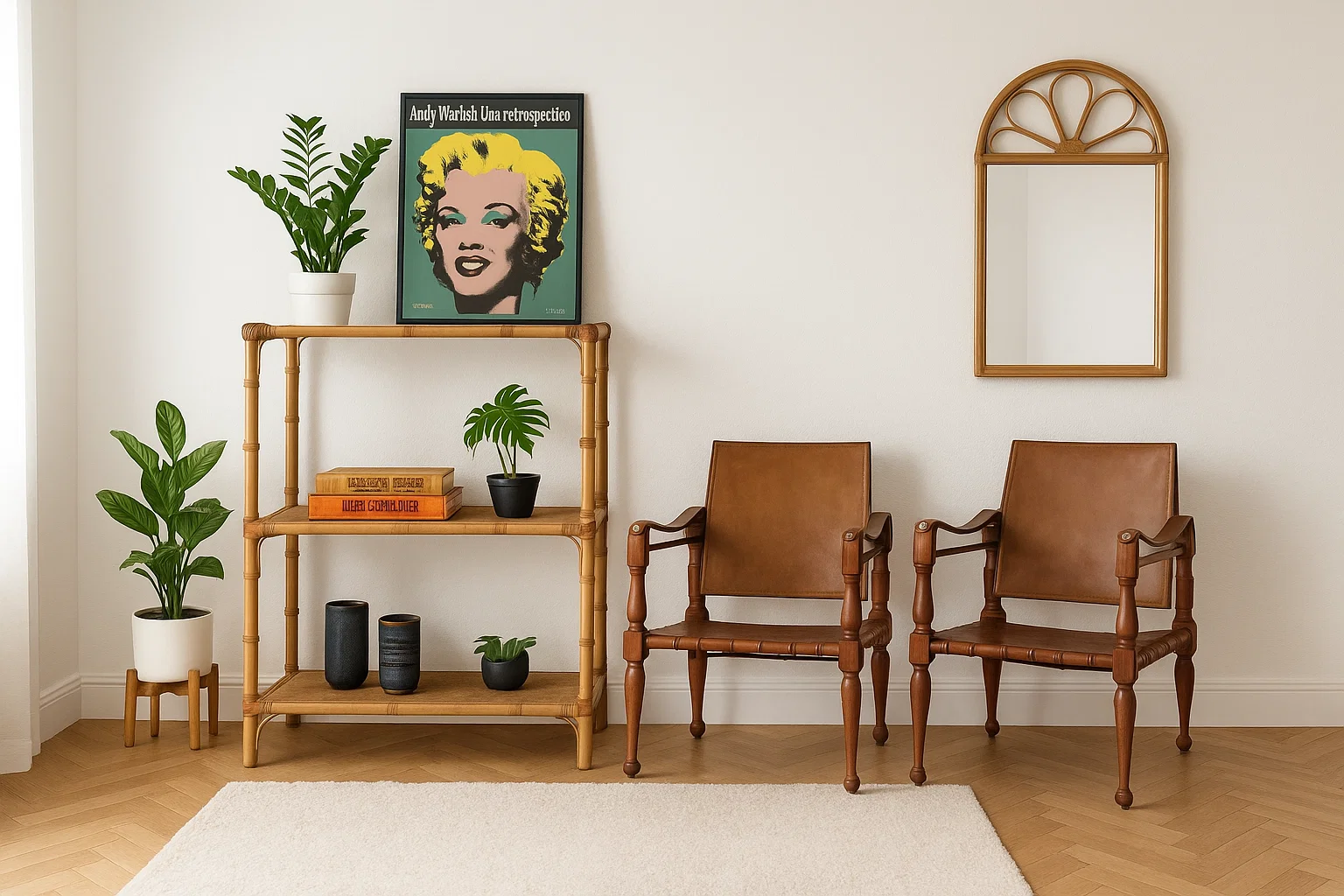
The Scandinavian-eclectic aesthetic blends the functionality of the vintage Nordic style with the energy of international influences, creating unique environments full of character.
This fusion celebrates the blending of different cultures and transforms each space into a vibrant canvas of vibrant colors such as grass green, lemon yellow, and orangey red.
Intense hues bring vitality and stimulate creativity, while floral and naturalistic patterns, incorporate nature into the everyday.
Exotic and colonial influences emerge through dark wood furniture, embroidered fabrics and metal details, adding a hint of adventure.
Underlying this style is a mixture of cultures and craft traditions. It is for you if you want a dynamic and ever-changing atmosphere.
How is it created?
- Solid and dark wood for furniture.
- Colonial-looking bamboo objects.
- Embroidered fabrics and ethnic motifs.
- Safari armchairs with animal motifs.
- Metal and wrought iron elements.
- Floral pattern wallpaper.
- Handmade pottery.
- Carpets with bright colors and sinuous patterns.
3. Mid-Century Modern: the icon of 1950s design.
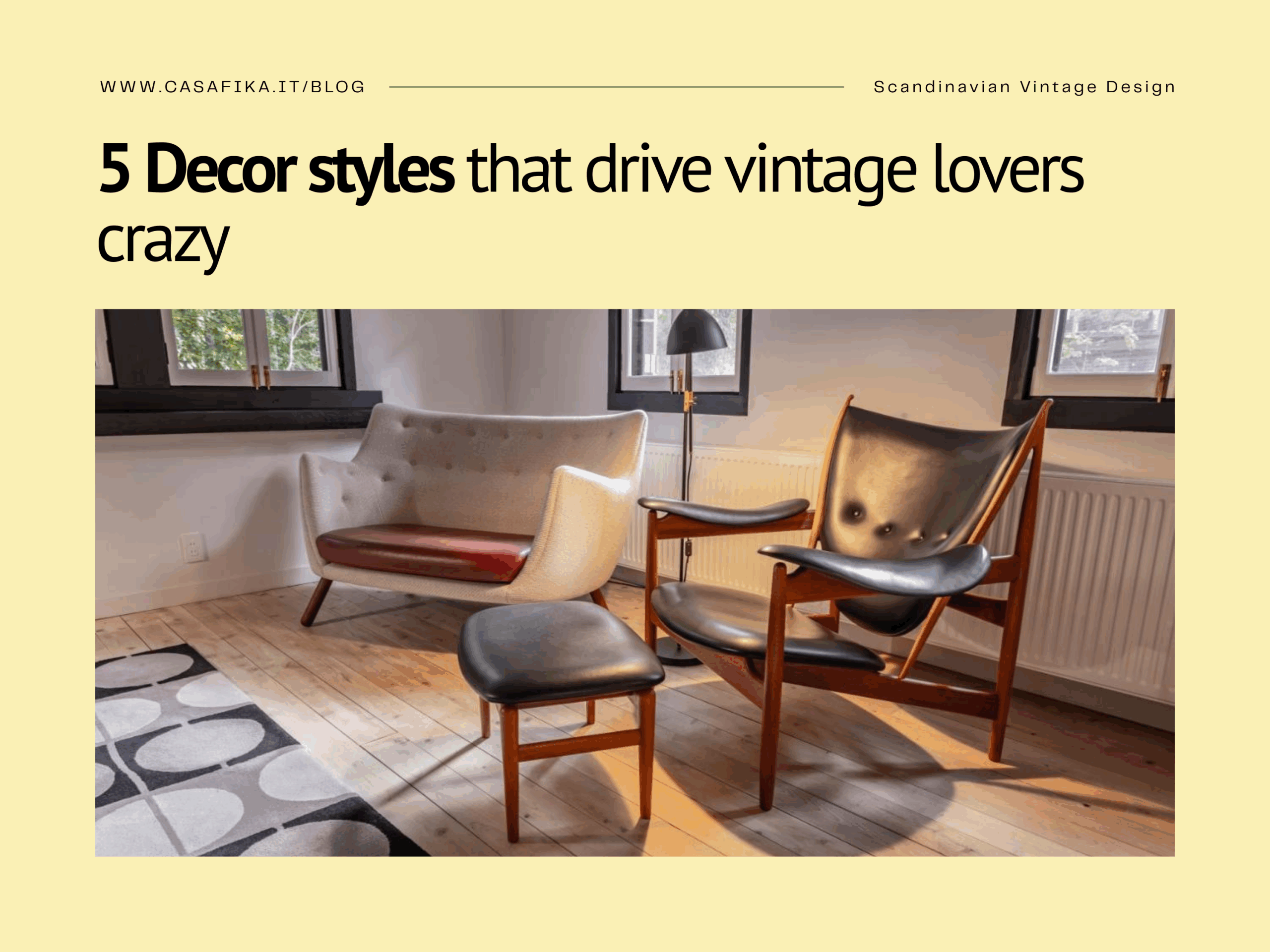
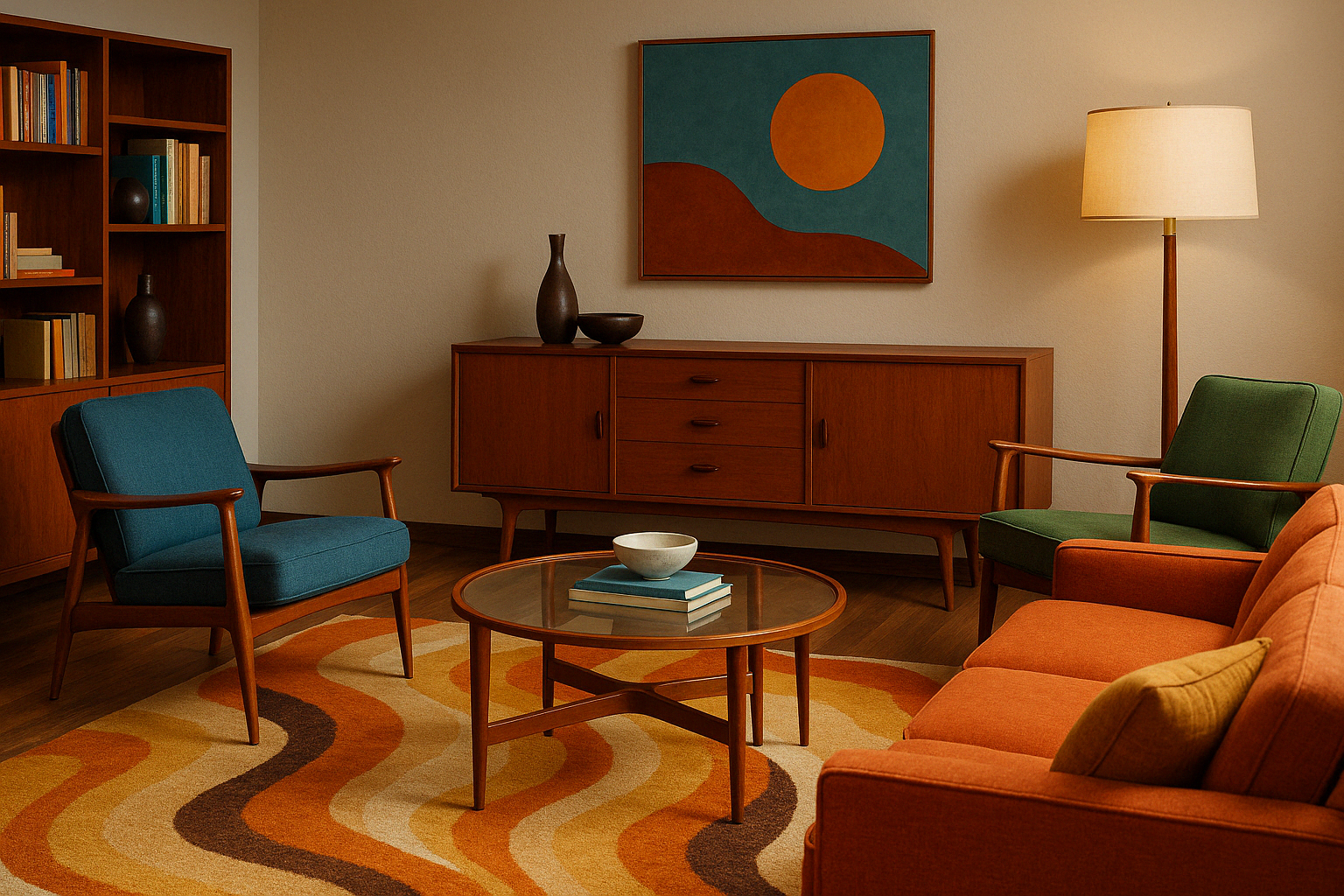
The Mid Century Modern celebrates essentiality and functionality, with a design that focuses on clean lines and generates an elegant, enveloping atmosphere.
Rooms are characterized by the contrast between warm wood, metal, and glass.
Colors range from natural wood tones to shades of blue, green, orangey reds and ochre, with bright accents enlivening the spaces.
The soft but precise geometric shapes give movement without excess. The Mid Century Modern is ideal for those looking for a refined space that is always impressive.
How is it created?
- Wood in orange or reddish finishes for furniture (teak, rosewood, mahogany, oak, etc.).
- Furniture with tapered wooden legs.
- Tables with glass tops.
- Leather, velvet and patterned cotton cover upholstered furniture.
- Metal details for furniture and accessories.
- Vintage Scandinavian bookcases.
- Eye-cacthing lamps, iconic design.
- Warm, earthy colors and accents of blue and green.
4. Cottagecore: the nostalgia of a country home.
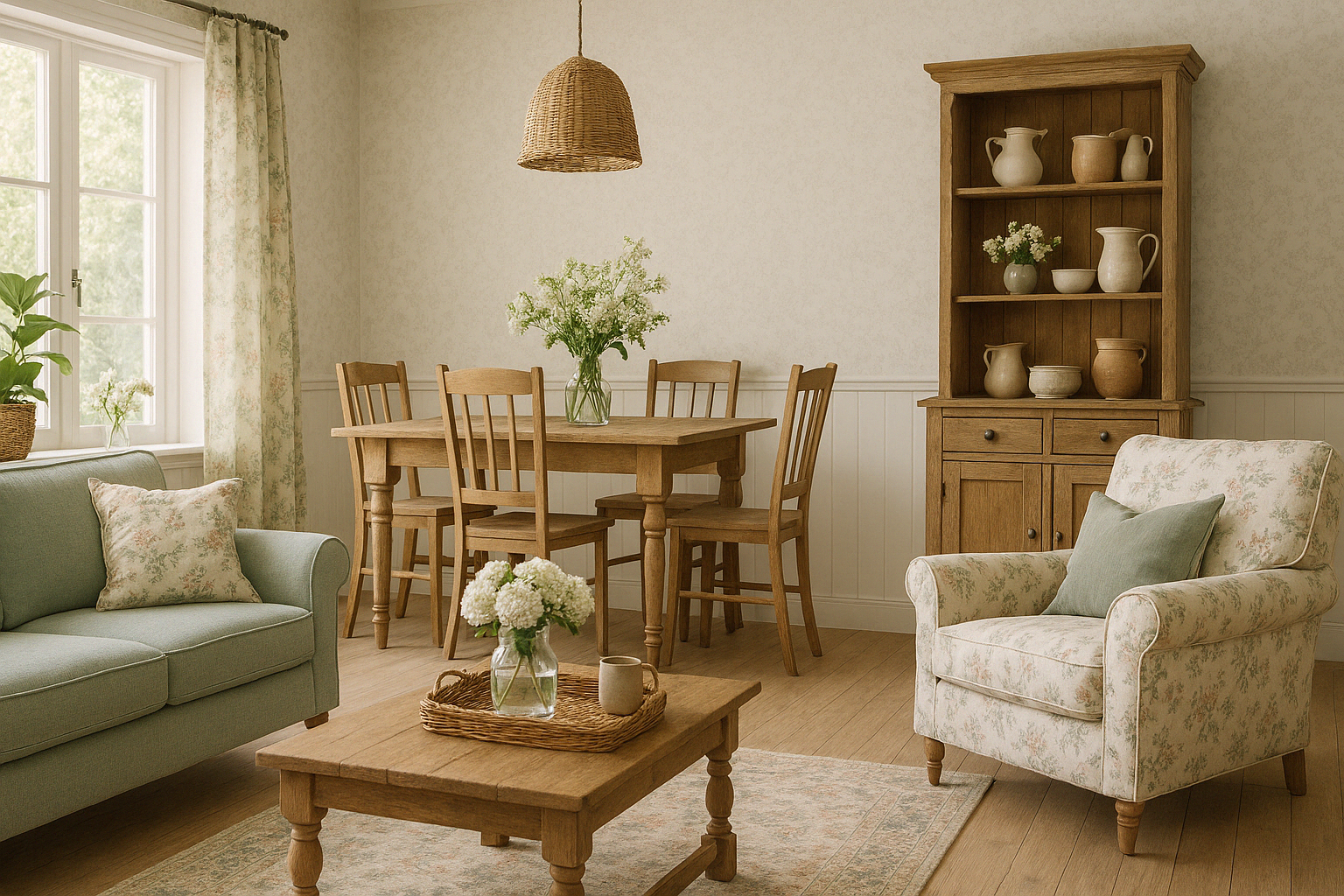
The Cottage Core is a style that celebrates the slow pace of life away from the city, mixing the mood of Swedish country houses with an English twist.
Its strength lies in simplicity, in returning to its roots, with furnishings that tell stories of tradition and comfort. Cottagecore celebrates a romantic, bucolic and timeless beauty, where natural materials and handcrafted details take center stage.
The spaces are immersed in a relaxed atmosphere, where natural wood and floral-patterned fabrics create an environment that invites tranquility and relaxation.
Muted tones, such as white, gray, blues and dusty greens, accompany the use of warm materials such as rattan, bamboo and wicker. Every corner of the house is designed to convey a sense of coziness, where every detail contributes to a pleasant comfortable environment.
How is it created?
- Vintage-inspired floral patterned fabrics.
- Mix of patterns such as stripes, checks and flowers.
- Rustic furniture made of natural wood, often pickled or painted.
- Wicker, bamboo or rattan details.
- Soft, natural hues such as white, gray and sage green.
- A practical and extendable table, to always make room for friends.
- Nature-themed decorations, plants and fresh flowers.
5. Hygge: Nordic comfort and conviviality.
Hygge is a true philosophy of life that embraces the best moments of our daily lives.
The Danish term Hygge (pronounced “hu-gah”) has no precise translation, but it represents a feeling of well-being, warmth and coziness that comes from the presence of things that make us feel safe and happy.
Furnishing home in Hygge style means creating an atmosphere that promotes inner peace. The secret of this style is simplicity: a few but carefully chosen elements that can make any space a special place that invites calm and connection with oneself.
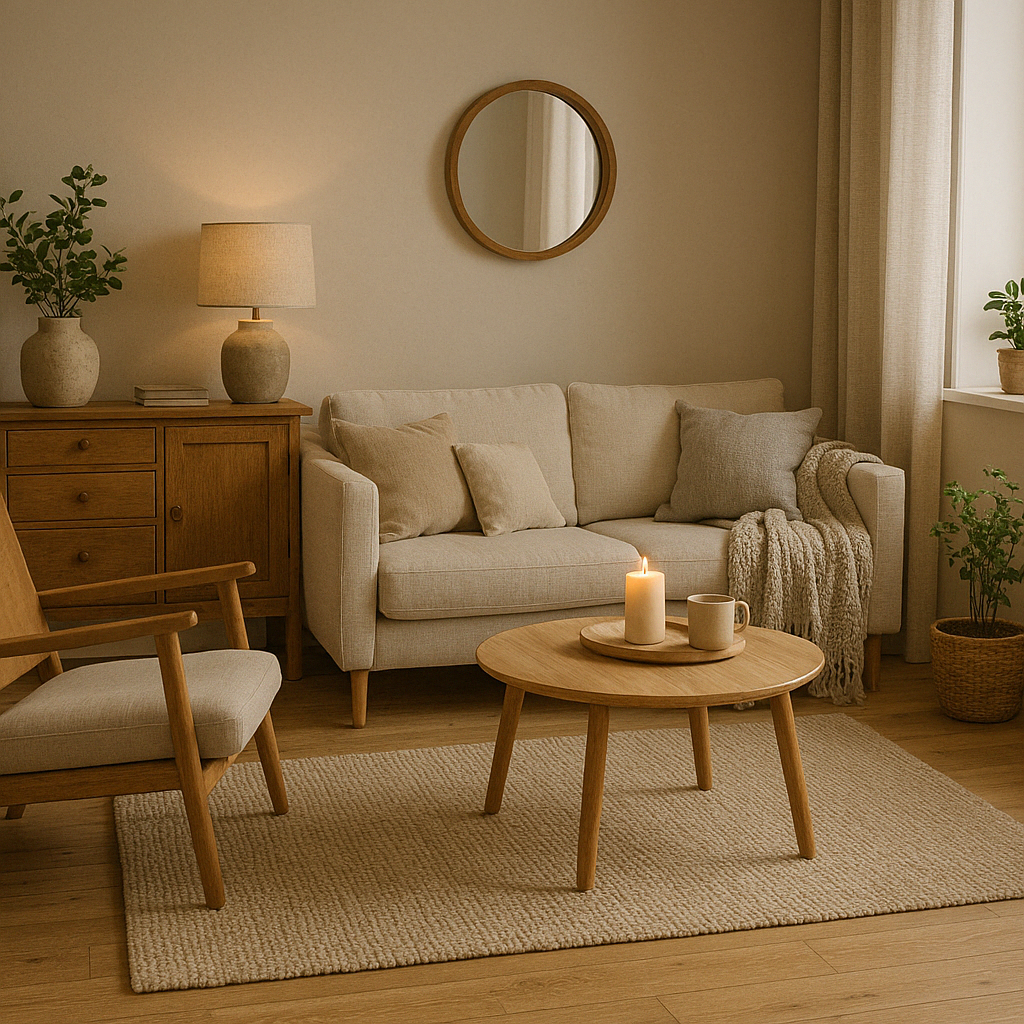
Each room should reflect, therefore, that feeling of well-being that comes from doing something simple, such as lighting a candle, covering yourself with a soft blanket, and enjoying a hot chocolate. It is not just a cozy environment for you, but a haven that encourages conviviality, where it is pleasant to spend time with family or friends, without too many frills, but with understated elegance.
How is it created?
- Light and natural wood, often recycled or reclaimed, to give brightness to rooms and promote a sense of warmth and lightness.
- Soft and natural fabrics, such as wool, cotton and linen, ideal for dressing blankets, pillows and sofas.
- Candles and soft lighting, which create a quiet and relaxed atmosphere, just as the Hygge concept dictates.
- Green plants and vintage pots that bring a natural, lived-in feel.
- Handcrafted ceramics, with soft lines and simple shapes that add personality and authenticity to spaces.
- Vintage furniture with soft shapes and clean lines. A perfect example? The round table, a symbol of conviviality, inviting you to be together and enjoy every moment in company.
Natural weave fabrics, ideal for pillows, tablecloths and curtains.
Which style is right for you?
Choosing the right style does not mean fitting perfectly into a pre-packaged style, but creating a home that tells who you are, without compromise. Which of these styles has won you over the most?
- Japandi: a perfect blend of Japanese minimalism and Nordic design for a peaceful, functional and serene environment.
- Scandinavian-Eclectic: a bold mixture of styles, bright colors and international influences, ideal for those seeking originality and dynamism.
- Mid-Century Modern: an icon of timeless elegance with clean lines, functional furniture, and a refined atmosphere.
- Cottagecore: the mood of country home, simple, romantic and cozy, for those who love craftsmanship and natural materials.
- Hygge: comfort and conviviality at the center of your home, with a philosophy of well-being that invites serenity and warmth.