There is a trend steadily emerging in interior design: vintage Scandinavian.
This phenomenon involves more than just aesthetics-it mirrors a society that is placing increasing importance on the value of emotions, sustainability, and care for oneself and one’s objects.
In a world where everything seems to be becoming standardized, homes are losing personality. People choose mass-produced furniture, neutral colors so as not to make mistakes, while fear of judgment curbs any bold choices. But is this really the home we want to live in?
Scandinavian vintage responds to the growing desire to return to embellish home spaces, ending this standardization. It is easy to match with contemporary furnishings, is of the highest quality and elevates the appearance of any home by bringing character and uniqueness.
1. Uniqueness and authenticity: every piece of furniture has a story to tell
When you buy a vintage Scandinavian piece of furniture, you are choosing an item that has already lived, bearing signs of time and unrepeatable details.
The modern furniture market is saturated with disposable products, where quality is secondary to speed of production.
Did you know that 90% of the cheap furniture produced today has an average lifespan of less than 10 years?
In contrast, a vintage Scandinavian piece of furniture has already stood the test of time and will continue to last.
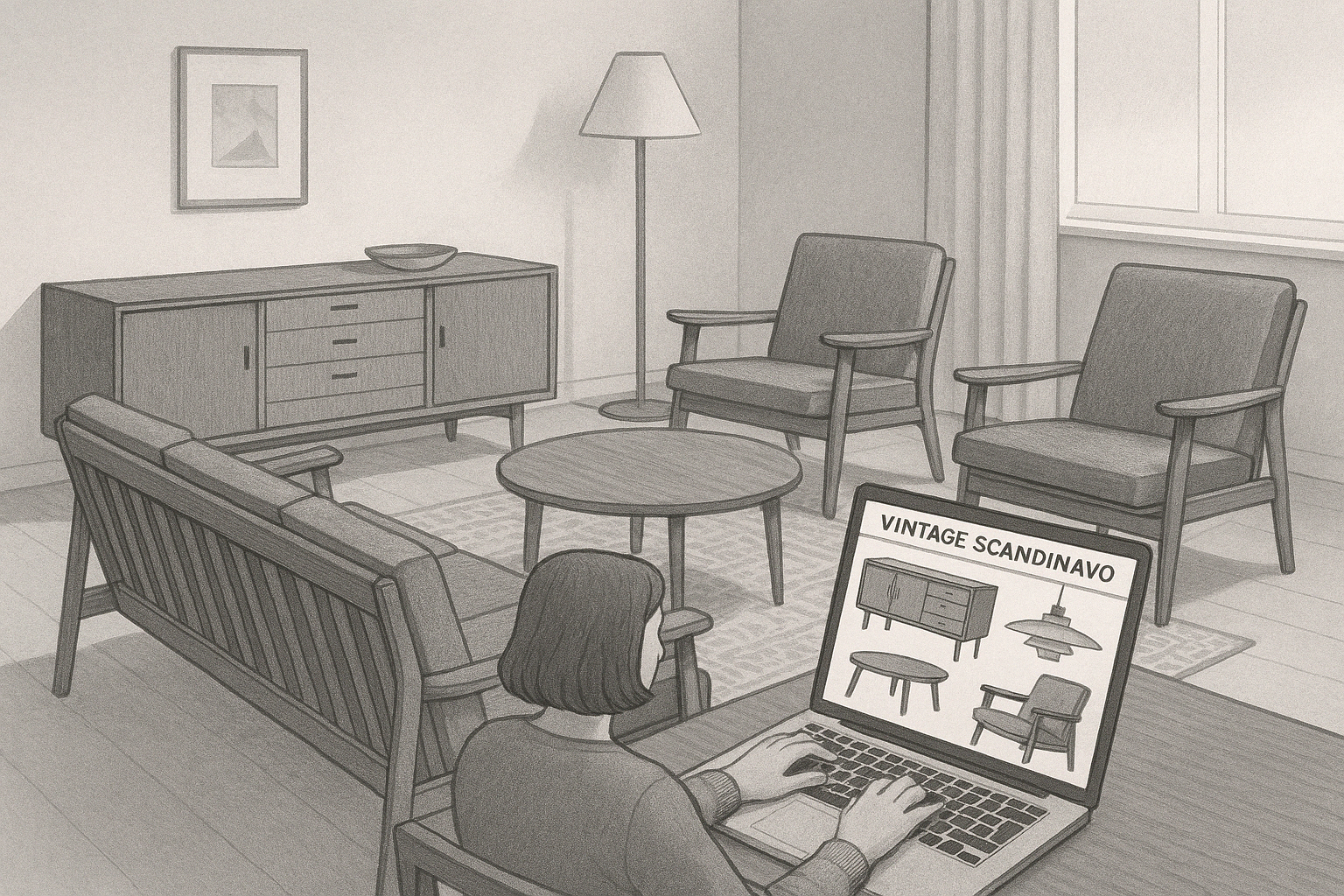
2. The power of nostalgia: why we need warmth and familiarity
Never before have we felt lonely, partly because of digital life and social insecurity.
Furniture, in all of this, plays a key role. A cold, anonymous, impersonal house amplifies the feeling of loneliness. A room furnished with pieces that have a history, on the other hand, conveys warmth, comfort and security.
Scandinavian vintage, with its cozy design, warm woods, and soft lines, subconsciously takes us back to a time when things were made to last.
3. Sustainability: a more ethical and conscious way of furnishing
Let’s talk numbers. The furniture industry is one of the most polluting industries in the world.
- 10 million tons of furniture waste are produced each year in Europe (source: Eurostat).
- Ninety percent of discarded furniture ends up in landfills, without being recycled.
- It takes up to 1,000 liters of water and more than 20 kg of CO₂ to produce a new piece of furniture.
Vintage is sustainable furniture: it corresponds to reuse, reduce pollution and extend the life cycle of furniture.
4. Quality craftsmanship: furniture made to last (and to be restored)
Vintage Scandinavian furniture is not only beautiful, it is often constructed with materials and techniques rarely seen today, such as:
- dovetail joints (no screws that fail after a few years),
- high-quality solid wood (teak, rosewood, birch, beech),
- hand finishes (not toxic paints or cheap laminates).
While most furniture today is designed to be replaced within a few years, vintage furniture can be restored several times without losing value. La quality of restored furniture remains high over time, because Nordic history pieces are built with materials and techniques combined to last.
Did you know that 65% of vintage furniture for sale is already over 50 years old and still in excellent condition? Try saying the same about a bookcase bought today in a low-cost store.
5. No more houses all the same: let's get back to expressing ourselves
Fear of others’ judgment or a desire to lighten up the space because we have too full a life? There could be these two factors behind the recent popularity of all-white houses.
This has led to the creation of rooms that are all the same: white furniture, neutral walls, impersonal decorations. The home is not a catalog: it is our refuge and should speak of us.
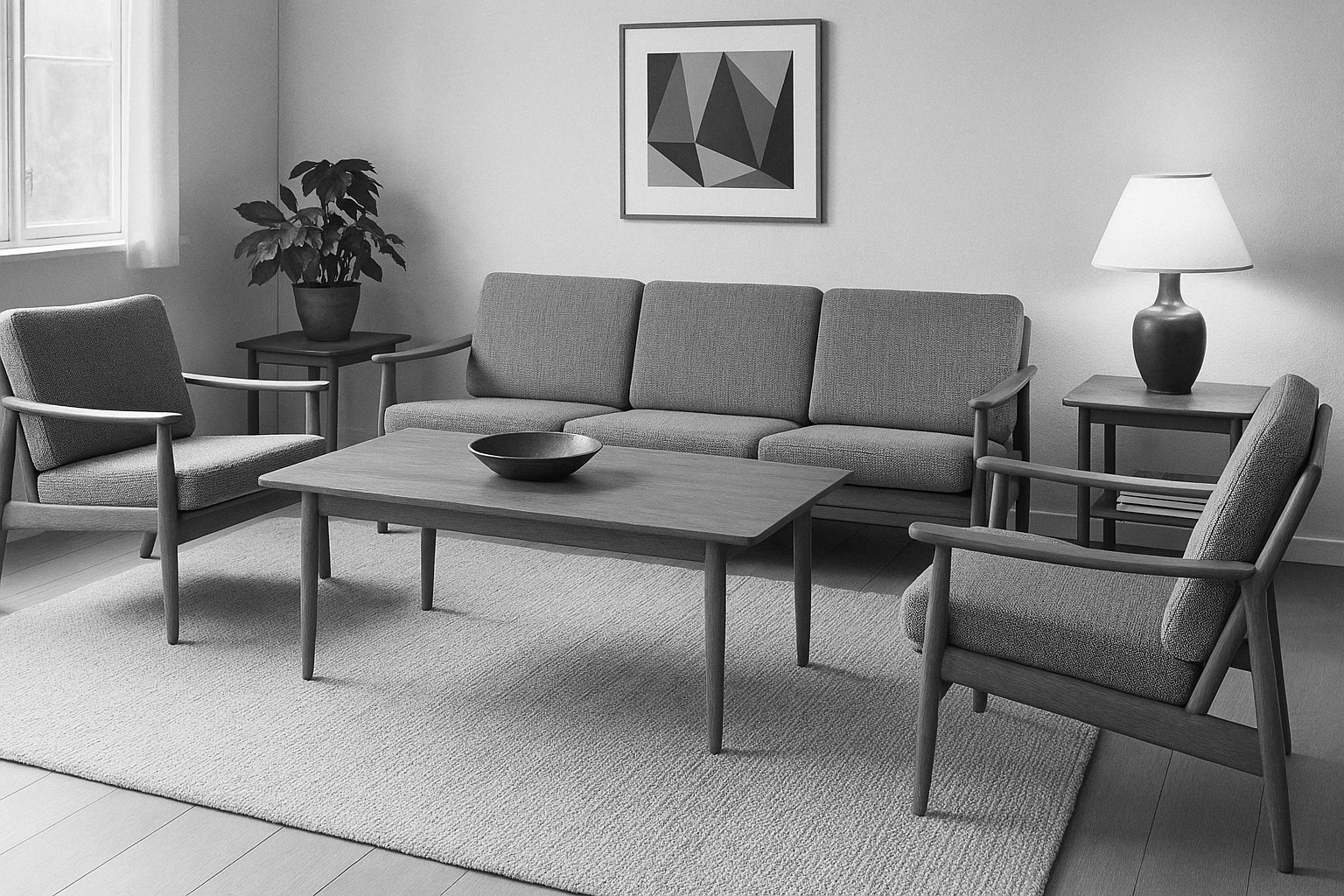
Choosing vintage Scandinavian furniture means reclaiming your own identity and incorporate true masterpieces, which have made design history, into your interiors.
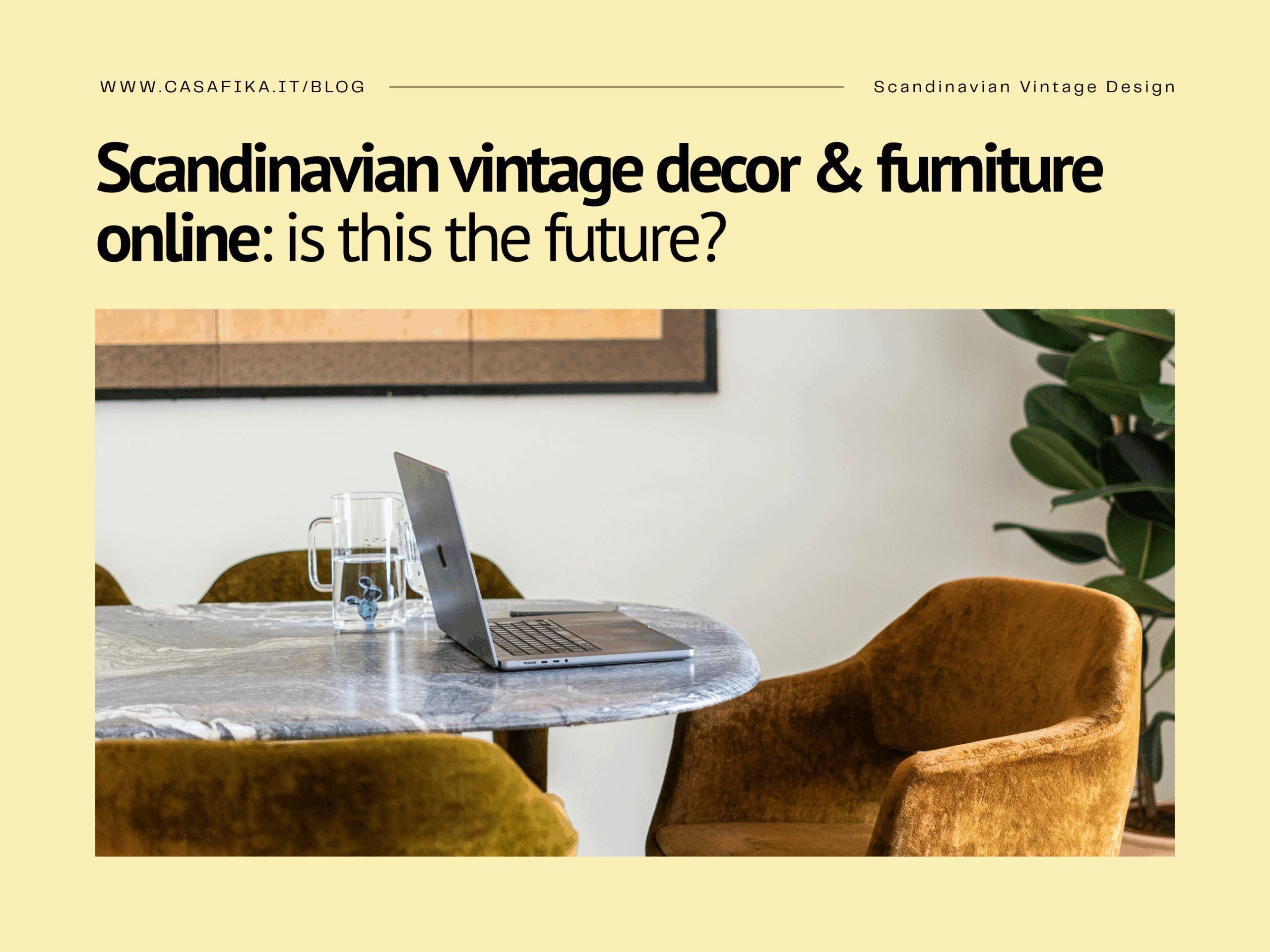
A 1960s teak sideboard? A table with tapered legs? A mustard-colored velvet armchair? Yes, because it is your home and it must tell your story.
6. An investment that grows over time
Over the past decade, the market for vintage collectibles has exploded, making investing in Scandinavian vintage items a plausible choice for those seeking quality and durability.
Several Nordic design pieces have grown in value by 200 percent in the last decade alone.
Therefore, these furnishings represent a real profitable investment.
7. Trends 2025: the return of contemporary vintage
Pinterest never lies. This inspirational social confirms that Scandinavian vintage is the future.
- According to Pinterest Trends searches for “vintage Scandinavian furniture” increased by 45 percent from 2022 to 2024.
- In the annual report Pinterest Predicts 2025, research related tointerior design that combines modern and retro elements are on the rise and reflect a growing passion for eclectic vintage aesthetics.
In the years to come, therefore, homes will no longer all look the same.
Home styling is moving toward environments that mix past and present, with period pieces combined with contemporary elements.
Where to buy vintage Scandinavian furniture online?
Those who love vintage know that finding the right piece takes time and luck.
Today, thanks to specialized e-commerce, it is possible to access a curated selection of authentic furniture without having to wander through flea markets or auctions.
Buying online allows you to compare models, conditions and prices calmly, choosing safely.
The important thing is to rely on experienced companies that guarantee high-quality photos, transparency about the condition of the furniture, and careful restoration.
Casafika does just that, selecting each piece directly in Scandinavian countries and taking care of its careful conservation restoration if necessary.
The result? Unique furniture with a story to tell, ready to bring character and authenticity to the homes of those who choose them.