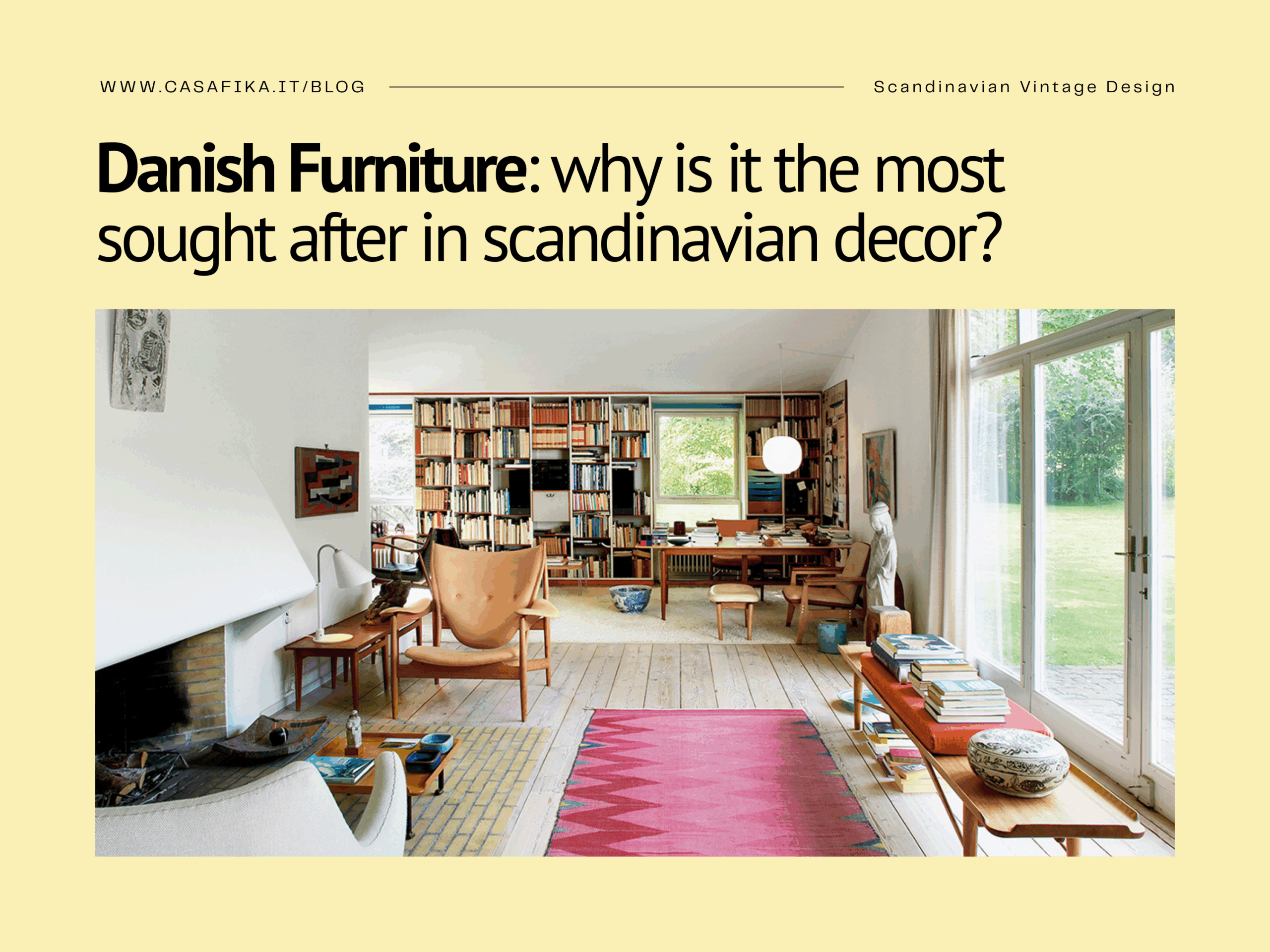
In the world of Scandinavian furniture, Danish furniture is the most coveted by enthusiasts and collectors. Not only iconic furniture such as Hans J. Wegner’s chairs, Børge Mogensen’s tables or Poul Henningsen’s lamps, but also less popular and rarer vintage furniture are considered true treasures.
The origin of excellence: the alliance between designers and artisans
In the second half of the twentieth century, the world of living underwent a radical change. The demand was clear: mass production.
Denmark, however, unlike other industrial settings found a unique way to combine quality and design: the close and continuous cooperation between designers and craftsmen.
Caleotte was the Copenhagen Exposition (1927-1966), which fostered new encounters and collaborations between architects and manufacturers. This event also consecrated Danish design internationally and opened the door to a wider audience.
Famous examples of these collaborations include Hans J. Wegner with Carl Hansen & Søn and Arne Jacobsen with Fritz Hansen.
Thanks to synergies like these, craftsmanship merged with the efficiency of mass production.
This combination is still a factor that makes Danish furniture from the twentieth century (and beyond), recognizable in the furniture world.
The central role of handicrafts
In Denmark, craftsmanship has always been a core value. At the dawn of the transition to mass production in Denmark, every piece of furniture started from raw materials and was then crafted using traditional techniques such as:
- curved woodworking;
- handcrafted stuffing;
- heald frame processing;
- glassblowing;
- metal forge.
Danish craftsmen followed a training course of at least four years, but direct experience was crucial to achieving excellence.
The roots and influences behind the success of Danish design
There are several factors that have marked Danish design and contributed to its success.
The essential tradition
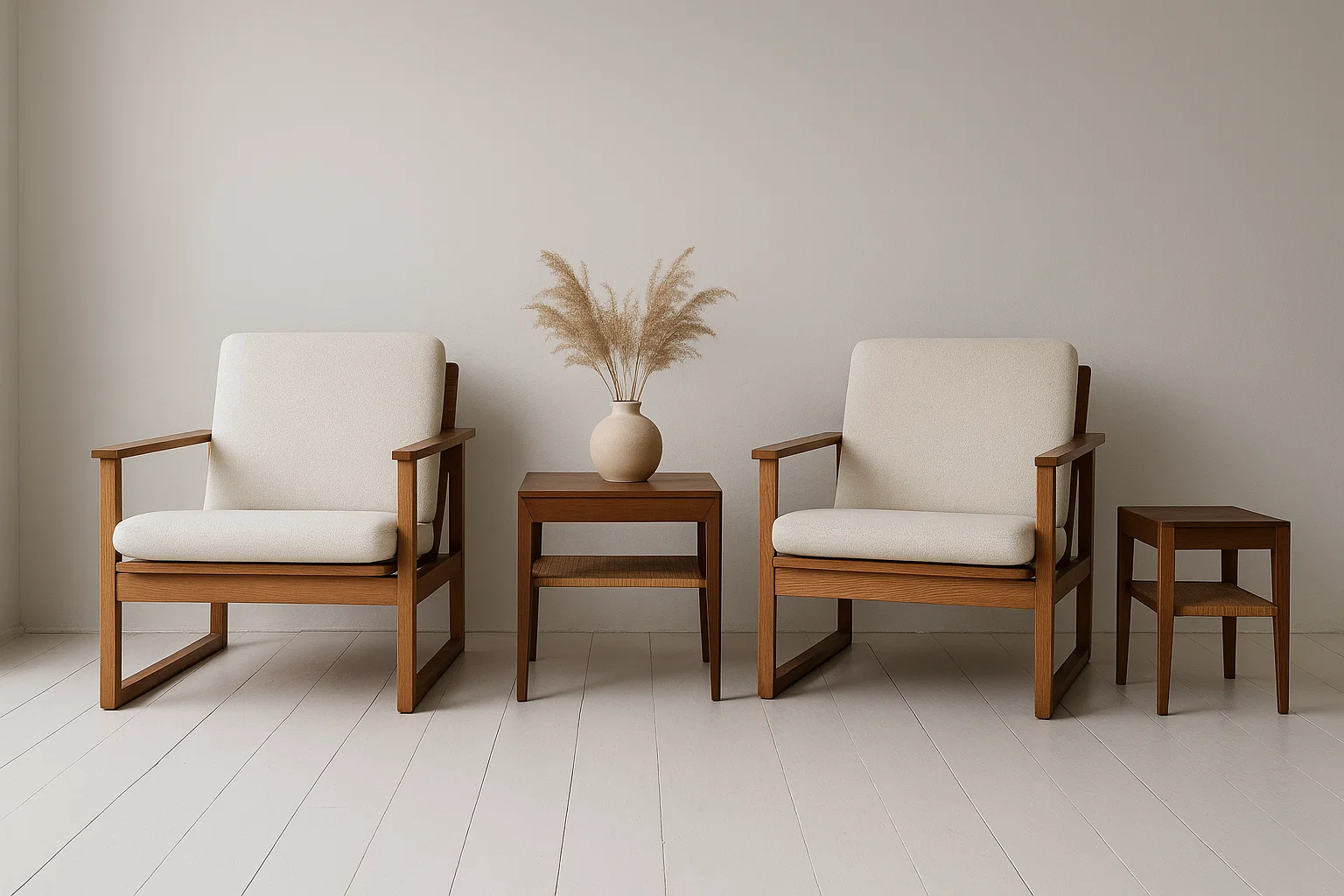
Danish design has its roots in a minimalist and functional culture of living. In the past, Danish rural houses had very few furnishings and simplicity dominated the domestic spaces.
This legacy has translated into an essential aesthetic, where each piece is designed to last and be functional to the fullest.
The skill of shipbuilding
Also connoting Danish design has been a long history of boat building. This is reflected in several aspects.
- Durable and skillfully crafted materials. The use of curved wood, precise joints and smooth surfaces is reminiscent of boat carpentry.
- Clean and functional lines. Many Danish furnishings feature streamlined shapes.
- Space efficiency. Room optimization is a fundamental principle of nautical design, and the same is true of Danish interiors, which are often characterized by compact, multifunctional solutions.
Functionalism and international influence
In the 1920s, functionalism revolutionized Danish design. Kaare Klint, considered the father of Danish modernism, reinterpreted traditional furniture from many cultures (such as Italian rural chairs, American Quaker furniture, and English Windsor chairs, as well as stools from ancient Egypt and Safari chairs) in a functionalist manner, thus creating a pleasing contamination of Nordic tradition with other aesthetics.
This cosmopolitan approach not only enriched Danish design, but also made it more accessible and appreciated globally.
Klint was not only a designer but also an influential teacher. His approach left a profound mark on subsequent generations, creating a strong link between Denmark and the rest of the world, a factor that proved to be a strength in consolidating the success of Danish design.
The legacy of Danish design
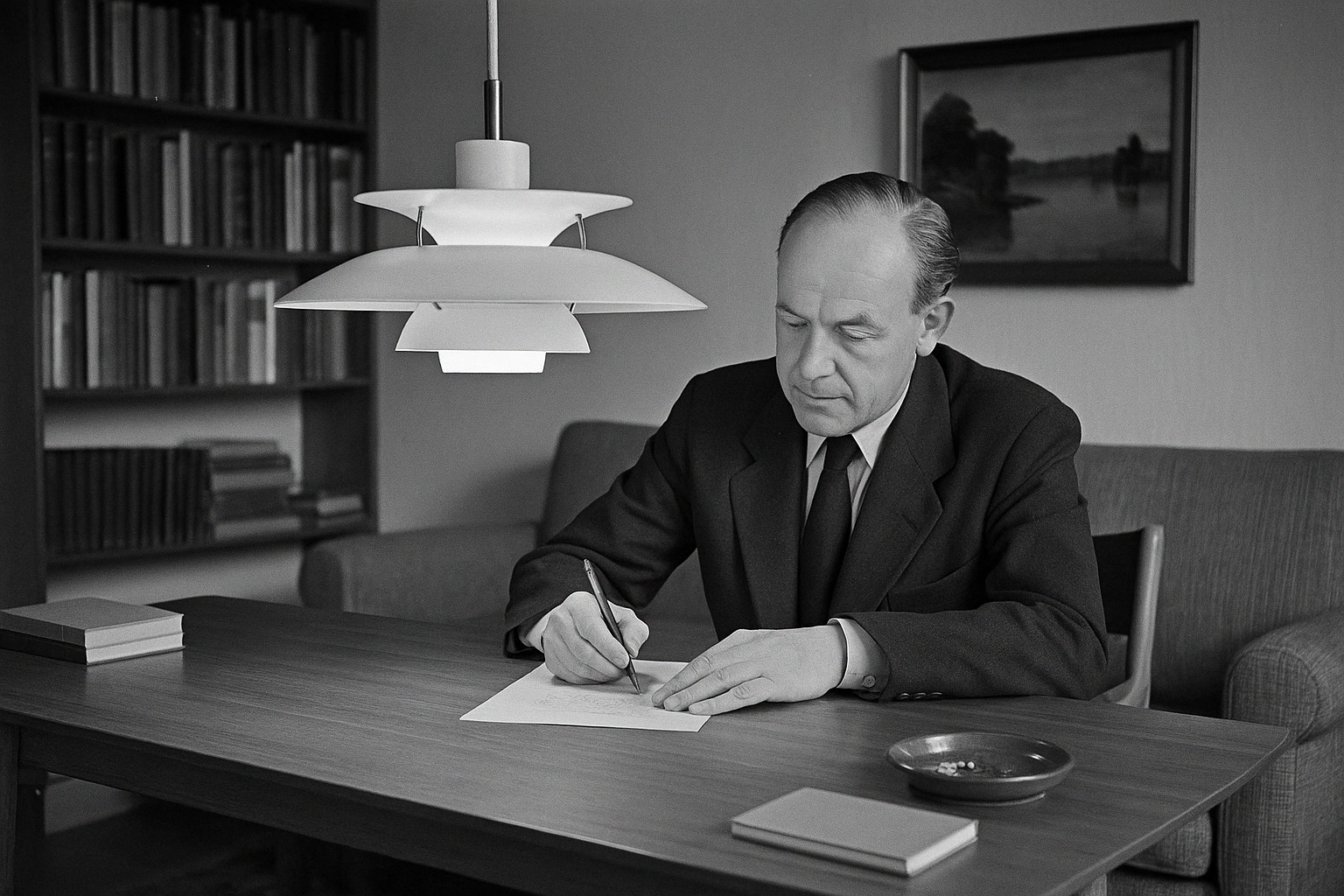
In 2017, the Danish Design Centre released a booklet collecting the cornerstones of the “Danish Design DNA” in order to preserve them over time and express them declaratively.
This “manifesto” identifies ten core values that characterize Danish design: Human, social, holistic, quality, craftsmanship, transformative, factual, user-oriented, simple and durable.
Wanting to simplify, in one sentence, Danish design is distinguished by its timeless simplicity, its focus on people and society, its quality craftsmanship, and its ability to transform itself while always remaining functional, durable, and centered on the real needs of the user.
Iconic designers and their works
Many Danish designers of the 20th century left a lasting imprint on the world of furniture, creating extraordinary pieces. Some of them, however, have become true design symbols, thanks to creations that continue to make history.
Arne Jacobsen: author, among many masterpieces, of the famous Egg Chair (1958) and the Swan Chair (1958), symbols of timeless elegance and comfort. Other famous pieces of his include the Series 7 Chair (1955), a stackable chair that conquered the world with its simple and functional design and the Ant Chair (1952), an icon of functionality and innovative design.
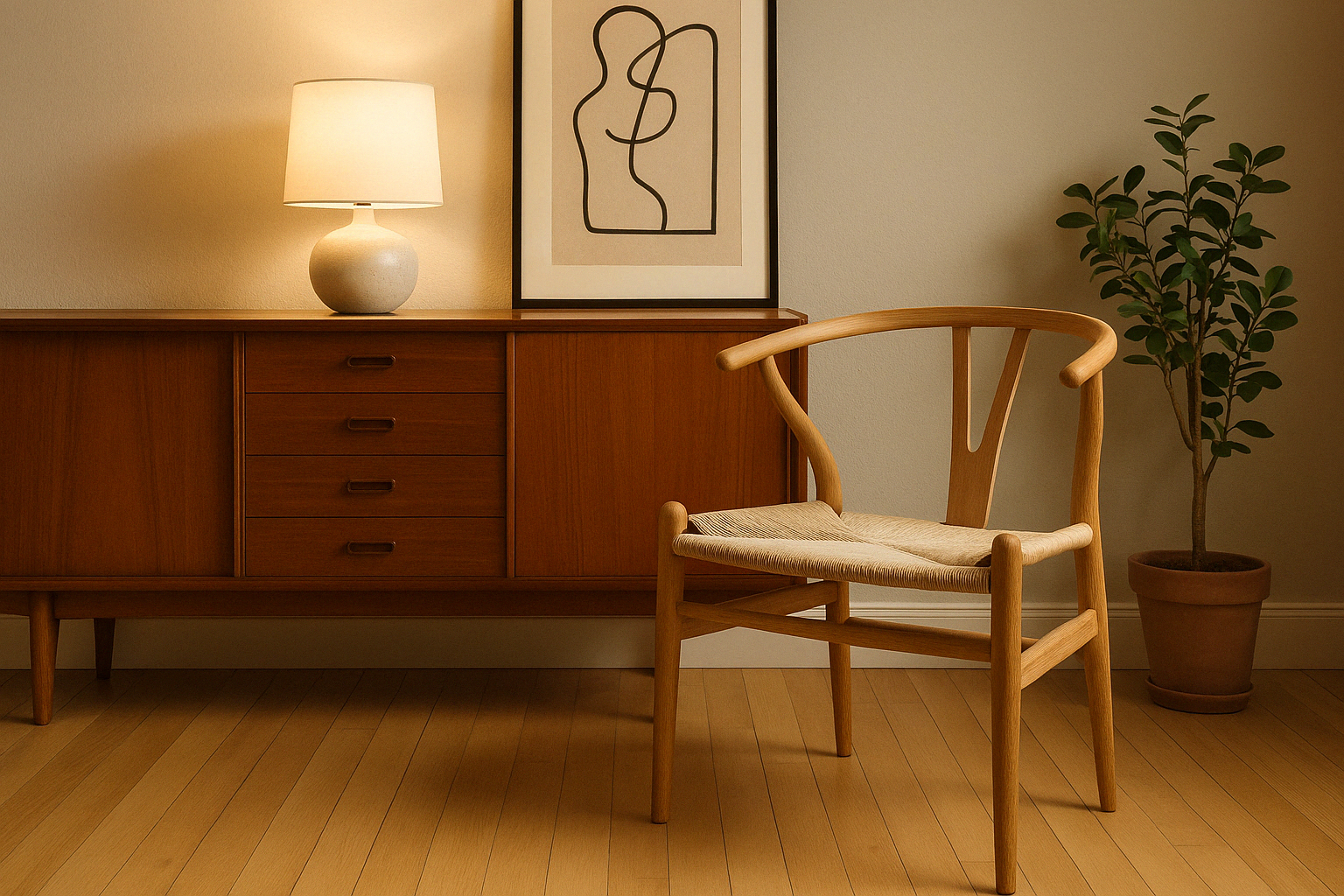
Hans J. Wegner: creator of the Wishbone Chair (1949), featuring a wooden frame and an ergonomic design inspired by Ming Dynasty Chinese chairs. Another of his masterpieces is the CH24 Chair (1949), also known as the Y Chair, which continues to be one of the most popular and sought-after chairs in the world.
Finn Juhl: pioneer of the organic style with the Chieftain Chair (1949), a work of art that combines sculptural lines and functionality. Another piece of his that has become iconic is the Pelikan Chair (1940), which expresses his recognizable style, characterized by soft, sinuous forms.
Kaare Klint: mentioned earlier, considered the father of modern Danish design. It is his Safari Chair (1933), inspired by colonial camp furniture and becoming an icon of functionalism. Among his other masterpieces is the Red Cross Chair (1930), an essential and sturdy piece that has become synonymous with functional elegance.
Poul Kjærholm: known for his use of metal in combination with natural materials, has created the refined PK22 Chair (1956), an example of sophisticated minimalism. Another of his iconic pieces is the PK80 Daybed (1954), reflecting his minimalist approach and his focus on combining fine materials such as steel, leather, and marble.
Back to the point: why is Danish furniture so sought after?
Why, then, is Danish furniture, especially vintage furniture, considered safe investments that increase in value over time?
- Perfect balance between craft and industrial production.
- Winning collaborations between designers and manufacturers.
- Functional minimalism and quality of materials.
- International influence and innovation constant.
If you are looking for furniture that possesses a timeless history and elegance, Danish design is a choice that goes beyond the fashions of the moment, proving to be always current and perfectly integrated into any environment.