There is no more timeless design than that which combines the freshness of modern with the charm of vintage Scandinavian furniture. But how do you combine brand new Nordic furniture with unique Scandinavian pieces from yesteryear, in a harmonious way?
In this article, you will discover how to combine Scandinavian furnishings from different eras., creating a space that is both fresh and rich in history.
Combining Scandinavian furniture from different eras: nothing could be easier
Matching antique or vintage furniture with new furniture usually requires some technical expertise. However, when it comes to Nordic furniture, everything becomes easier.
Vintage Scandinavian furniture is characterized by clean lines and a light, evergreen design that makes it perfect for blending in with contemporary furniture. This means you can create a harmonious space even if you don’t have great interior design and styling skills.
That said, we are here to provide you with a few pro tricks to achieve a balanced and impactful mix.
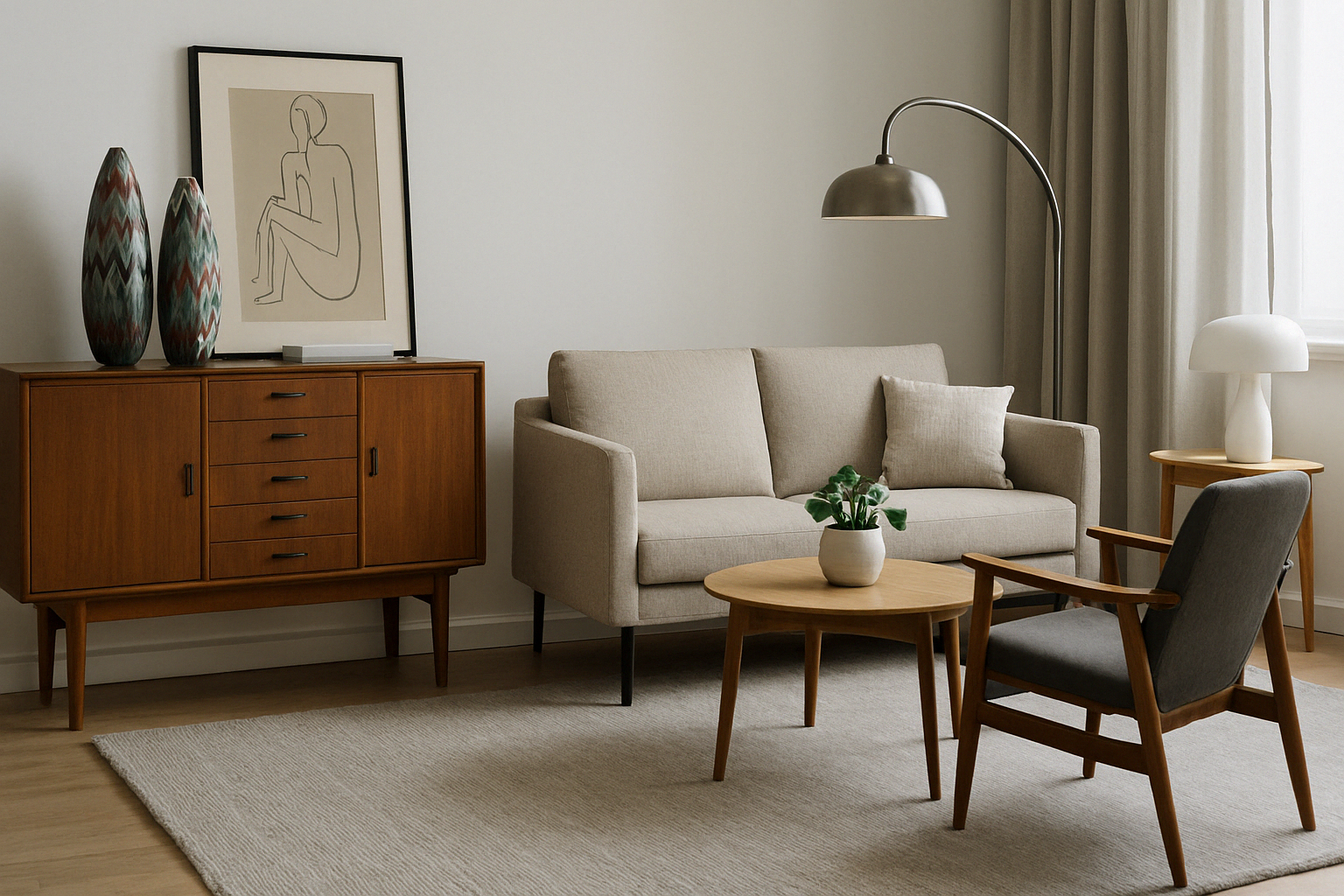
Incorporating vintage furniture into a modern setting
If your space already has a modern design, basic and clean, but you want to give it a magazine feel, insert a vintage piece of furniture that will warm it up.
Just one piece statement for each room That makes a real style statement. You don’t necessarily have to match it with other furniture-it looks good on its own. If you want to add an extra visual connection, you can play around with poster frames in the same material or other small vintage details that echo it.
Strategic proportions: the 70/30 rule
When you mix contemporary Scandinavian and vintage, it can come in handy to have the 70/30 rule. If 70 percent of the room is furnished with new pieces, you can devote the remaining 30 percent to vintage furniture, accessories or light fixtures.
This balance allows pieces that have a history to stand out while adding an elegant, lived-in charm to pre-existing furnishings.
Alternation of hot and cold materials
For a balanced design, play with the combination of warm and cool materials.
When we talk about “warm” and “cool” materials in furniture, we refer to a distinction based on the feelings these materials arouse and their visual impact.
- I hot materials are those that evoke a feeling of coziness, intimacy and comfort. Usually, these are natural materials such as wood, jute, cotton, rattan, bamboo, wool, etc.
These materials tend to have more earthy tones, such as brown, beige and orange, which are perfect for creating warm and enveloping atmospheres. - I cold materials, on the contrary, are those that convey feelings of modernity and sophistication. These include glass, metal, plastic, and marble. The colors associated with these materials tend to be more neutral and cool, such as white, gray, blue and black.
When you combine these two factions of materials, you can achieve a visual balance that avoids both the excessive heaviness of warm materials and the sterility of cold materials.
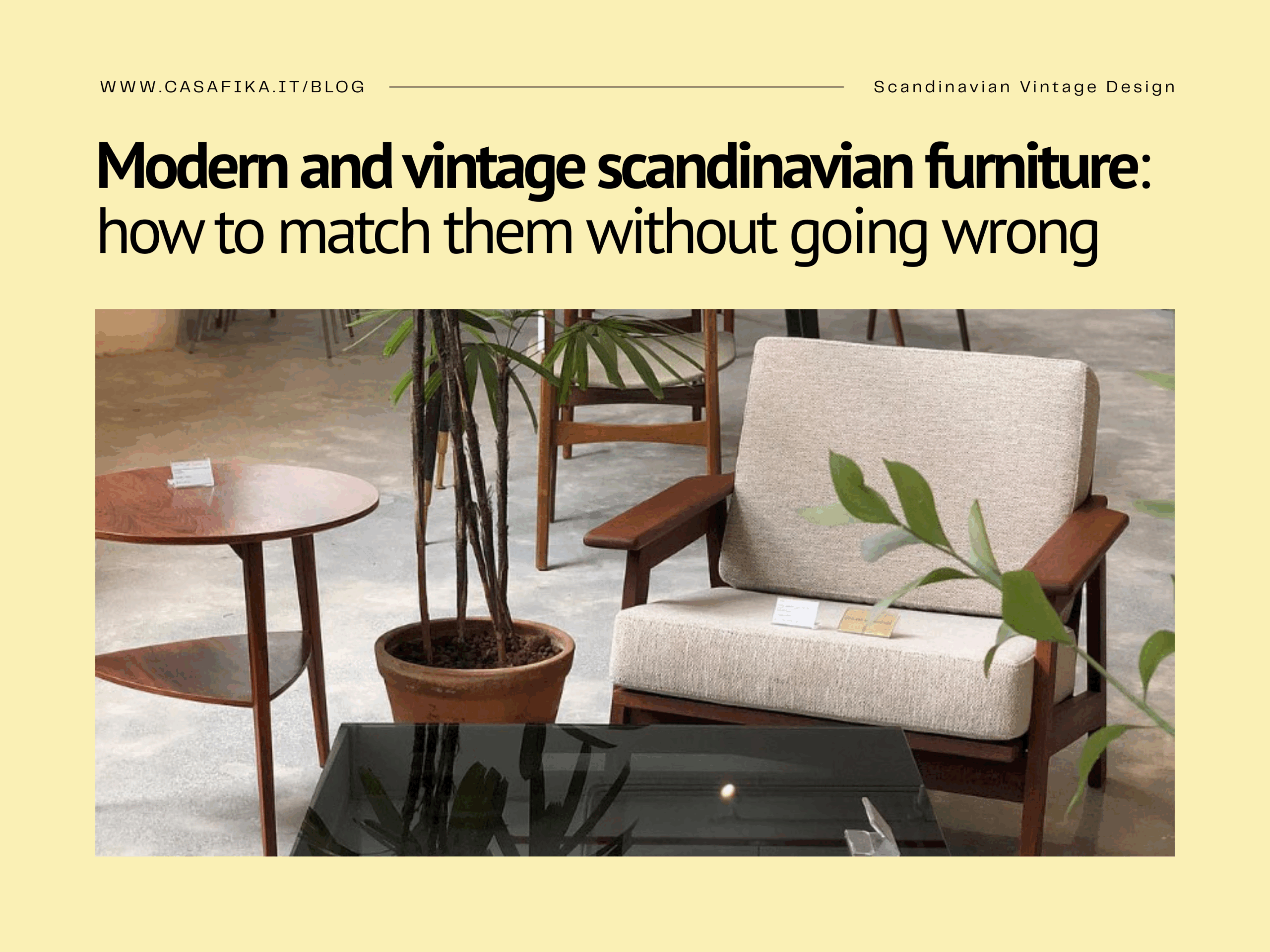
For example, a solid wood piece of furniture can be paired with a glass surface, creating a pleasing contrast between the solidity of wood and the lightness of glass. Or, an armchair upholstered in wool or cotton can be placed next to a marble or metal coffee table for an interesting contrast.
In general, the trick to matching warm and cool materials is to look for a point of mediation that allows the two elements to balance each other out.
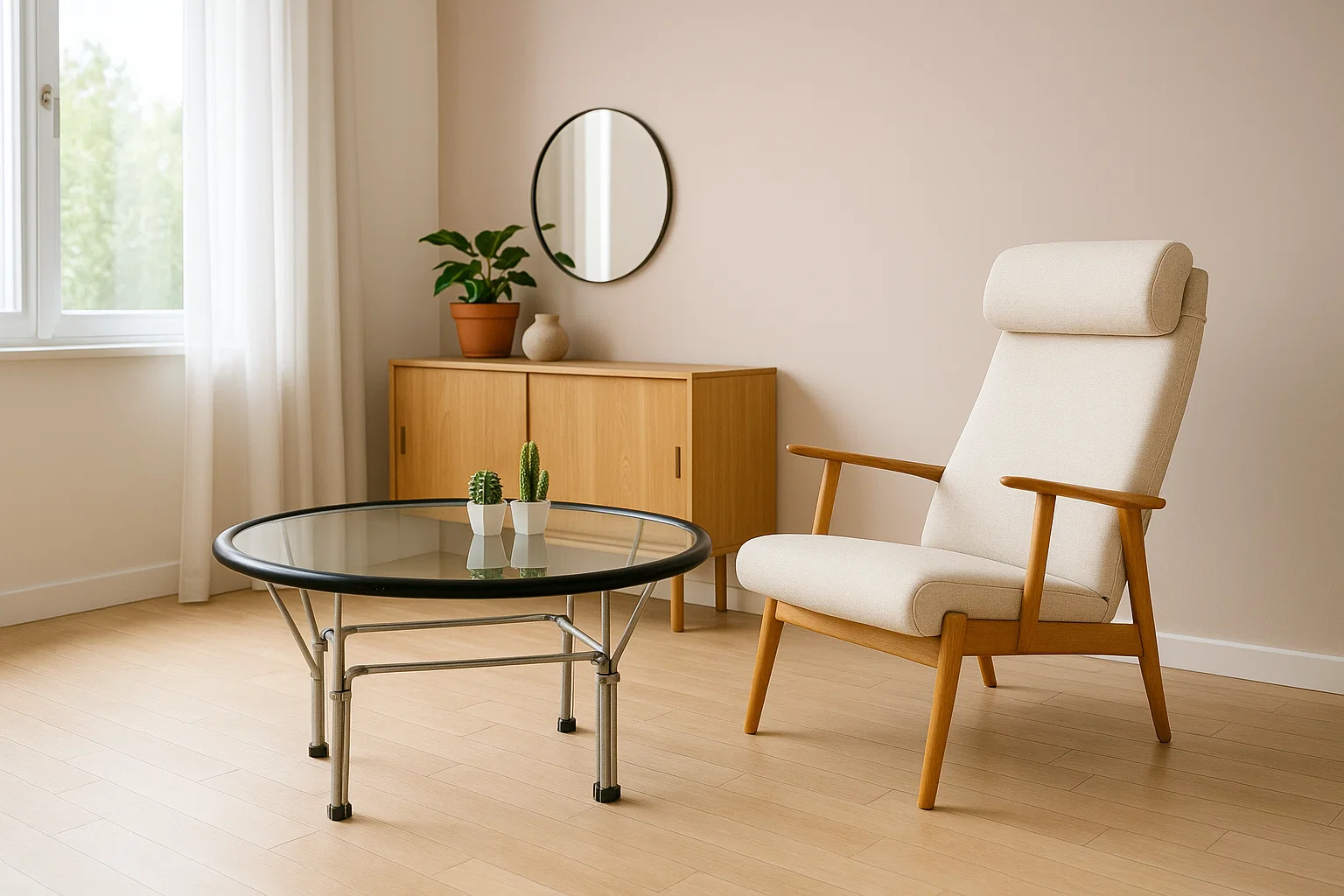
Matching different wood essences
In the match between new and vintage, it often happens to wonder how to match different wood essences. Here are some tricks that can avoid disharmony.
- Don’t overdo the grain: if a wood element has pronounced grain, pair it with wood pieces with more subdued textures.
- Warm wood goes with other warm or neutral woods of the same shade (yellows with yellows, reds with reds). Cool wood matches cold or neutral woods. You can mix different intensities of the same shade, such as light, medium and dark reddish wood.
- Very light wood looks good with very dark wood: light and dark woods can make an elegant contrast, such as a light oak floor with a dark teak bookcase, as long as the temperatures are compatible.
- Best not to match yellowish wood with reddish or reddish with orange: avoid combinations such as yellowish pine with red cherry or teak with orange oak, which can be unharmonious.
- Limit the types of wood: Do not use more than three types of wood in the same room to avoid visual confusion.
- Add neutral wood to balance: a neutral wood such as light ash can give a light touch to darker woods.
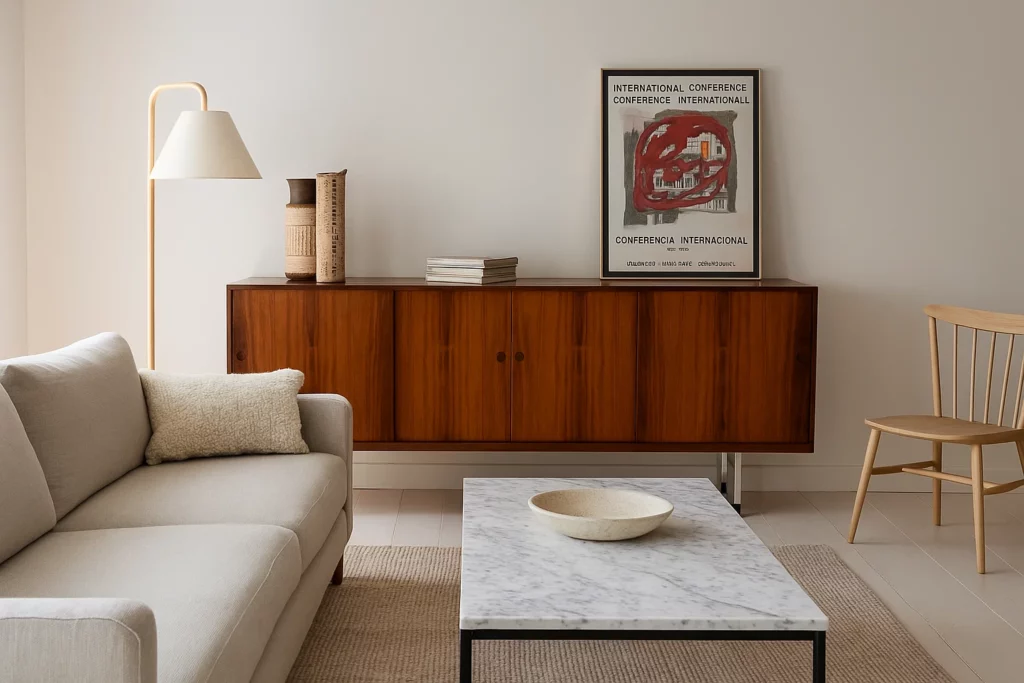
Practical examples for the perfect modern and vintage Scandinavian mix
The golden rule: always differentiate.
Here are some practical examples for the perfect modern and vintage Scandinavian mix.
- New minimal white table and vintage Scandinavian chairs
A minimalist white table with sharp lines goes perfectly with vintage Scandinavian chairs in light wood and/or with leather or fabric seats. Scandinavian chairs, with their iconic shape and wood details, bring a touch of history without overloading the room, keeping the atmosphere fresh and contemporary. - Vintage patterned armchair and modern sofa without feet in light fabric
Add a statement piece with a vintage patterned armchair, perhaps floral or with a geometric pattern, and pair it with a modern footless sofa in a light fabric, such as gray or beige. The sofa’s streamlined design provides a neutral base that sets off the vintage armchair, while the mix of patterns and textures lends personality to the room without being too heavy. - New one-color minimal sideboard and vintage mirror
A minimalist, single-color sideboard with clean lines becomes the perfect base to house a vintage mirror From the gilded or dark wood frame. The rigorous, modern look of the sideboard, with its smooth, even surface, beautifully contrasts the worn look of the mirror. This mix creates an intriguing dynamic, where the modern almost seems to “stand out” next to the beauty of the vintage piece. - Vintage bed and modern nightstands (or vice versa)
A vintage bed, perhaps with a solid wood or metal headboard, can be paired with modern nightstands in light wood or with metal details, with geometric and minimalist lines. If you prefer the opposite effect, a modern bed in light wood and linear design can be paired with vintage nightstands, perhaps in dark wood or with brass or ceramic details. The important thing is that the materials are contrasting, but always in harmony. This balance will make each piece stand out without clashing with the other. - All modern and vintage lamps
If the entire decor is modern, add some vintage lamps can give a new dimension to the space. For example, a 1960s metal pendant lamp can become the signature piece in the dining area. The contrast between the restraint of modern design and the retro elegance of vintage lamps is a great way to enrich the look without distorting it. - Vintage sideboard with modern posters on it
A vintage Scandinavian sideboard, is the ideal starting point for hosting a series of modern posters, with minimalist frames and geometric lines. The vintage sideboard fits perfectly with the cool modern poster art, creating a contrast of eras that works effortlessly.
Creating the perfect mix of modern and vintage Scandinavian furniture is an art accessible to everyone. By playing with proportions, materials, and details, you can create a unique, cozy, and timeless space. All you have to do is experiment to find your ideal balance.