Scandinavian do it better. There’s no denying it: in managing space and creating domestic atmospheres, Scandinavians have an edge.
Scandinavian houses have a look that is both harmonious and uncluttered, but also practical and cozy. In short, one look at a Scandinavian interior is enough to trigger that urge to head off to Northern Europe.
The history of Scandinavian design is the key to understanding its great success in the world.
Born in Northern European countries, it has perfectly blended aesthetics with practicality, creating welcoming and sustainable environments.
Scandinavian furniture never goes out of fashion because it represents a perfect balance between tradition and innovation, they enhance natural materials such as wood and promote responsible use of resources.
Nordic design before the 20th century
The efficient approach of Nordic design is evident as early as the 19th century, a period when the fusion of traditional craftsmanship e new aesthetic ideas began to take shape.
Handicrafts were the backbone of household production, with a clear preference for objects that were practical but also aesthetically pleasing.
The furniture was mainly made of solid local wood. Surfaces were often left natural, without being painted.
The design of the furniture was aimed at optimizing space. Many of the furnishings were multifunctional: folding cribs, convertible tables, tables with drawers, folding beds…
Chairs generally had high, comfortable backs, and kitchen cabinets were custom-made. In the kitchen, then, there was always a large workbench used both as a kitchen island and for making crafts.
From the aesthetic point of view, one cannot fail to mention the Kurbits decorative movement (Sweden) characterized by the use of stylized floral motifs on decorations and furniture.
Surely you have already seen Dala Horses, the small wooden horses symbolic of Swedish folklore, painted in bright colors and decorated with floral patterns and details in the style of Kurbits.
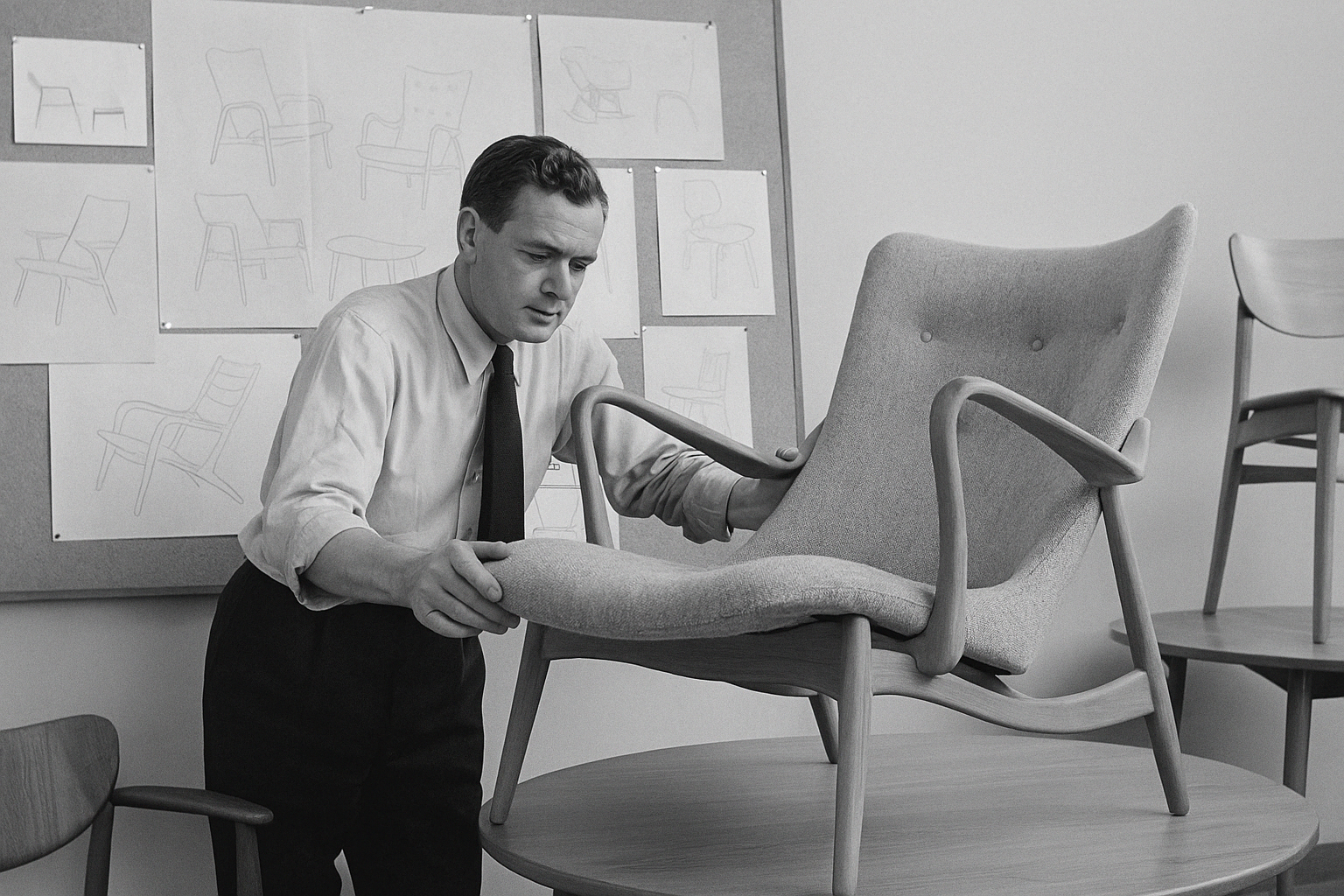
1920s and 1930s: the marriage of craftsmanship and modernity
In the 1920s and 1930s, Northern Europe was influenced by two major artistic currents: on the one hand, theArt Nouveau and the Neoclassicism, still firmly rooted in craft production; on the other, the growing modernism, with the introduction of new industrial techniques and the need to create functional furniture for a changing society.
- In Denmark, the magazine Skønvirke promotes a return to handicrafts and celebrates the beauty of local traditions and the art of craftsmanship.
- On the other hand, in Sweden, the poster acceptera pushes for design that is useful, beautiful, and perfectly attuned to current social changes.
- In these years there is, of course, no shortage of influences from the famous Bauhaus, the school that transformed world design with its philosophy that combined art and industry.
In this context, key figures emerge who are still familiar to us today. In Sweden in the 1930s, Bruno Mathsson began to develop ergonomic chairs with organic shapes, such as the Pernilla armchair 1934. In Denmark, Arne Jacobsen began his career also in the 1930s, winning first prize in the Akademisk Arkitekt Foreningen competition for a “house of the future” designed with F. Lassen in 1929.
The 1940s and 1950s: the rebirth and democratization of design
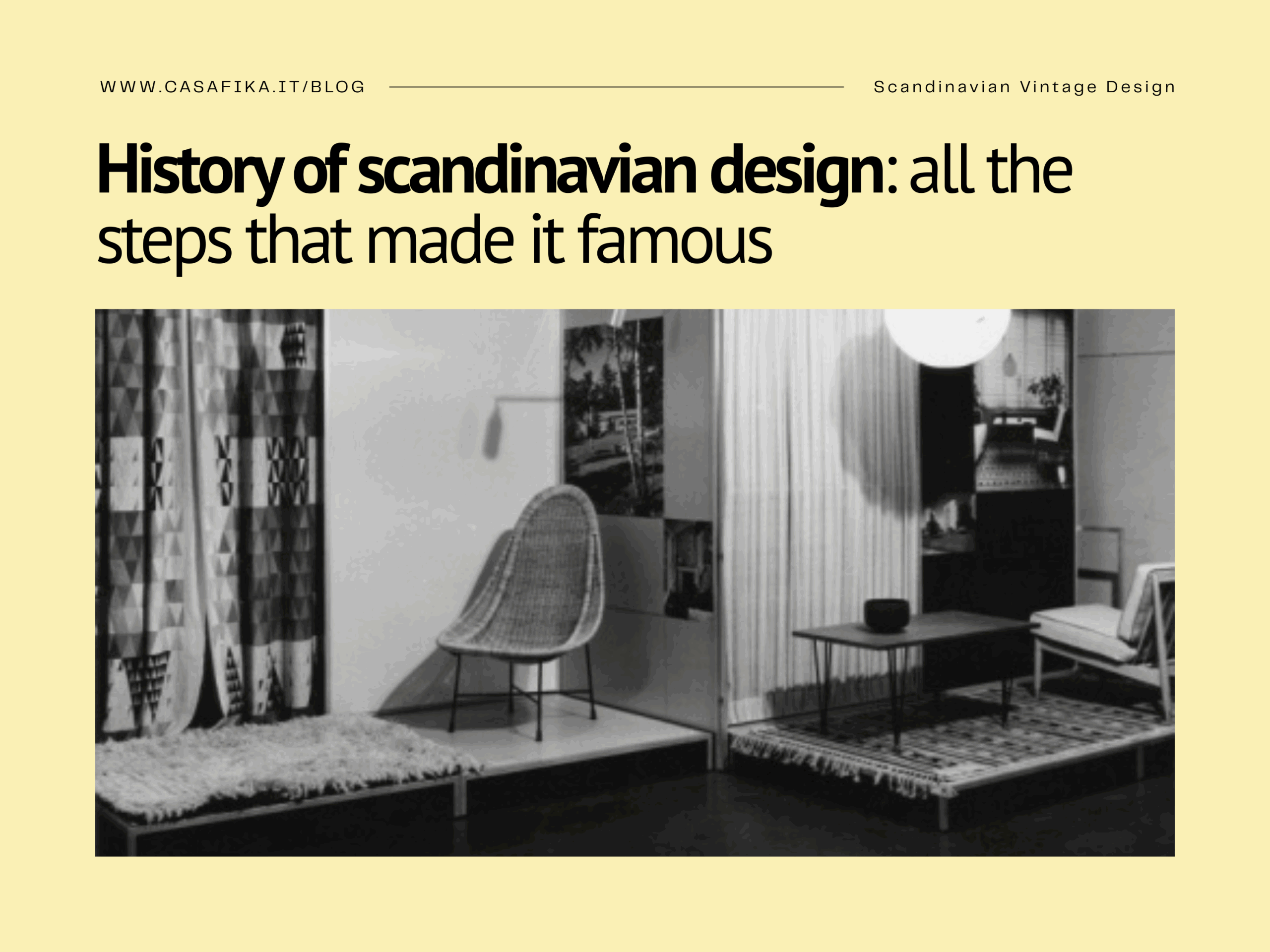
After World War II, Scandinavian design became the tool for renewing and making everyday life more functional. In a period marked by reconstruction, Nordic designers have a clear goal: to create objects that are beautiful, functional, and, above all, affordable for everyone.
A Hans Wegner needed only a simple sketch to bring his Wishbone Chair, a chair that combines tradition and modernity in a masterpiece of craftsmanship.
Alvar Aalto, with his Paimio chair, he rewrote the rules of comfort, designing a seat perfect not only for hospitals, but for all public and domestic spaces.
What to say about Arne Jacobsen? With his Egg Chair, becomes the master of innovation, pushing the boundaries of form and materials.
Another aspect that makes this stage unique is theindustrialization of production. The idea that design should be for everyone, not just the privileged, became a guiding principle that paved the way for the global spread of Scandinavian design.
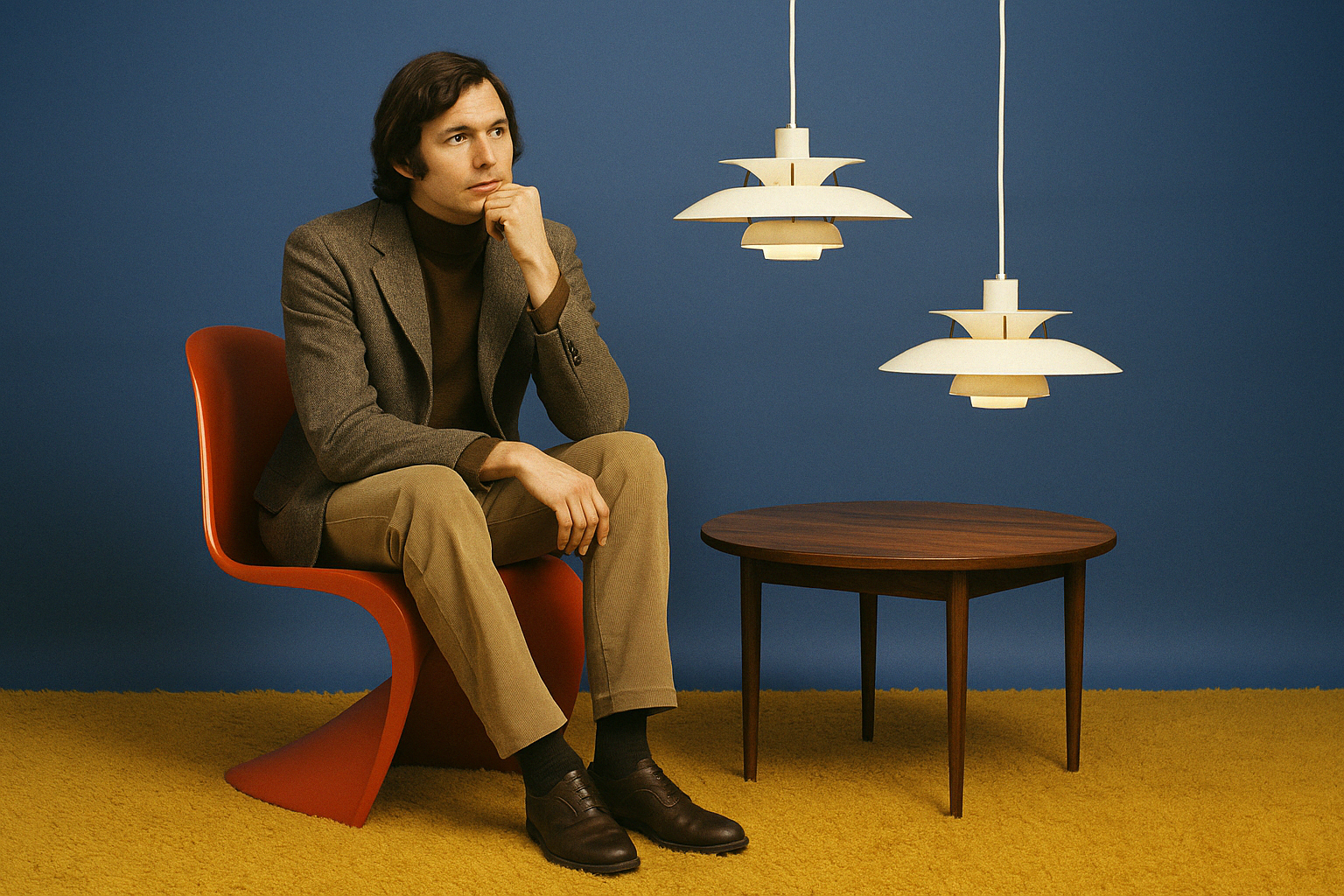
The 1960s and 1970s: plastics, experimentation and new horizons
In the 1960s and beyond, Scandinavian design continued its evolution, incorporating new materials and innovative forms.
Plastic, for example, is making its way into the world of furniture thanks to designers such as Verner Panton, who with the Panton Chair creates a one-piece chair that brings futurism into everyone’s home.
During this period, Scandinavian design established itself as a symbol of quality and style, with a growing interest in ergonomics and accessibility ..
Innovation is not just about materials. Poul Henningsen, with his famous lamps PH, he introduces the concept of diffused light, creating soft atmospheres.
From the 1980s to the present
From the 1980s to the present, Scandinavian design has evolved with a contemporary vision that not only celebrates the functionality and simplicity, but also embraces a philosophy of sustainability 360 degrees.
Today, Scandinavian designers are deeply committed to using environmentally friendly materials, reducing environmental impact and adopting sustainable technologies.
The real strength of Scandinavian design today also lies in a culture that revisits the past with a keen eye for vintage.
Scandinavian houses are a mix perfect blend of second-hand pieces e vintage Scandinavian furnishings that tell stories of decades past, always in harmony with the present. Modern designers love to mix iconic pieces with contemporary elements, creating environments where every nook and cranny has a story to tell, but without ever sacrificing an understated, refined, minimalist style.
In this way, Scandinavian design always remains relevant, continuing to combine aesthetics, functionality and sustainability, with a predilection forcraftsmanship and the return to natural materials, while also celebrating the timeless appeal of vintage.