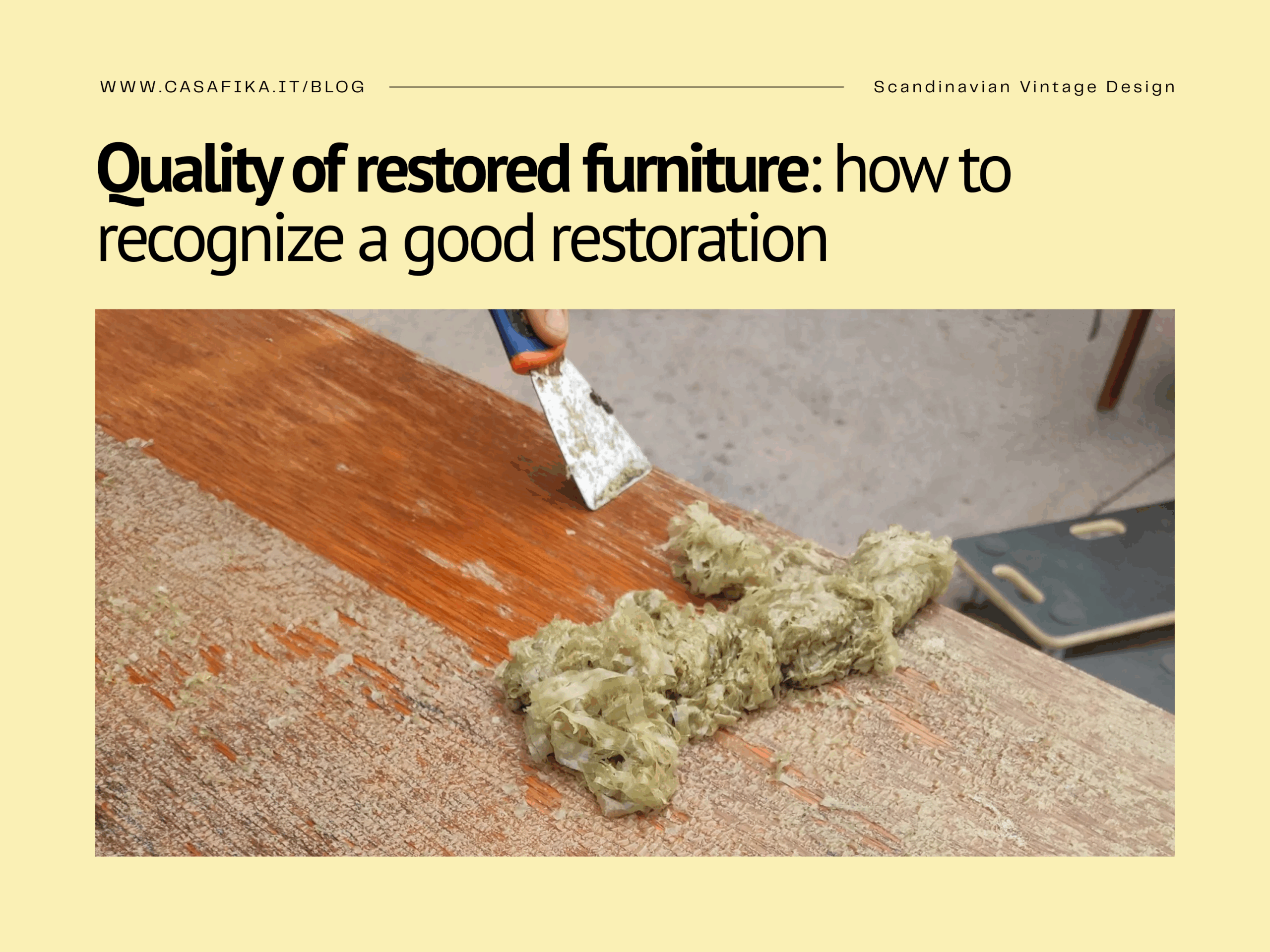
When it comes to the quality of restored furniture, the first step is to know what to look for.
Good restoration is not only seen at a glance: it is an art that preserves the history of the furniture, improves its functionality, and makes it more valuable over time.
Whether you are buying a piece of Scandinavian furniture from the 1950s or a vintage chair, it is critical to recognize the elements that define quality work.
In this article, you will discover how to distinguish a well-done restoration from one that could compromise the value of your favorite piece.
Why is restoration quality so important?
It is not just an aesthetic issue. It is a matter of respect for the history of furniture and of enhancement of its original characteristics.
When you buy vintage furniture, especially Scandinavian furniture, you are not just buying a piece of furniture-you are adding a history to your home that deserves to be preserved. A poorly done restoration can undermine the charm of the piece and cause you to lose the authentic value you’re looking for.
How to recognize a quality restoration
There are unwritten rules that professionals follow to preserve the authenticity and value of furniture.
1. Traditional experience and techniques
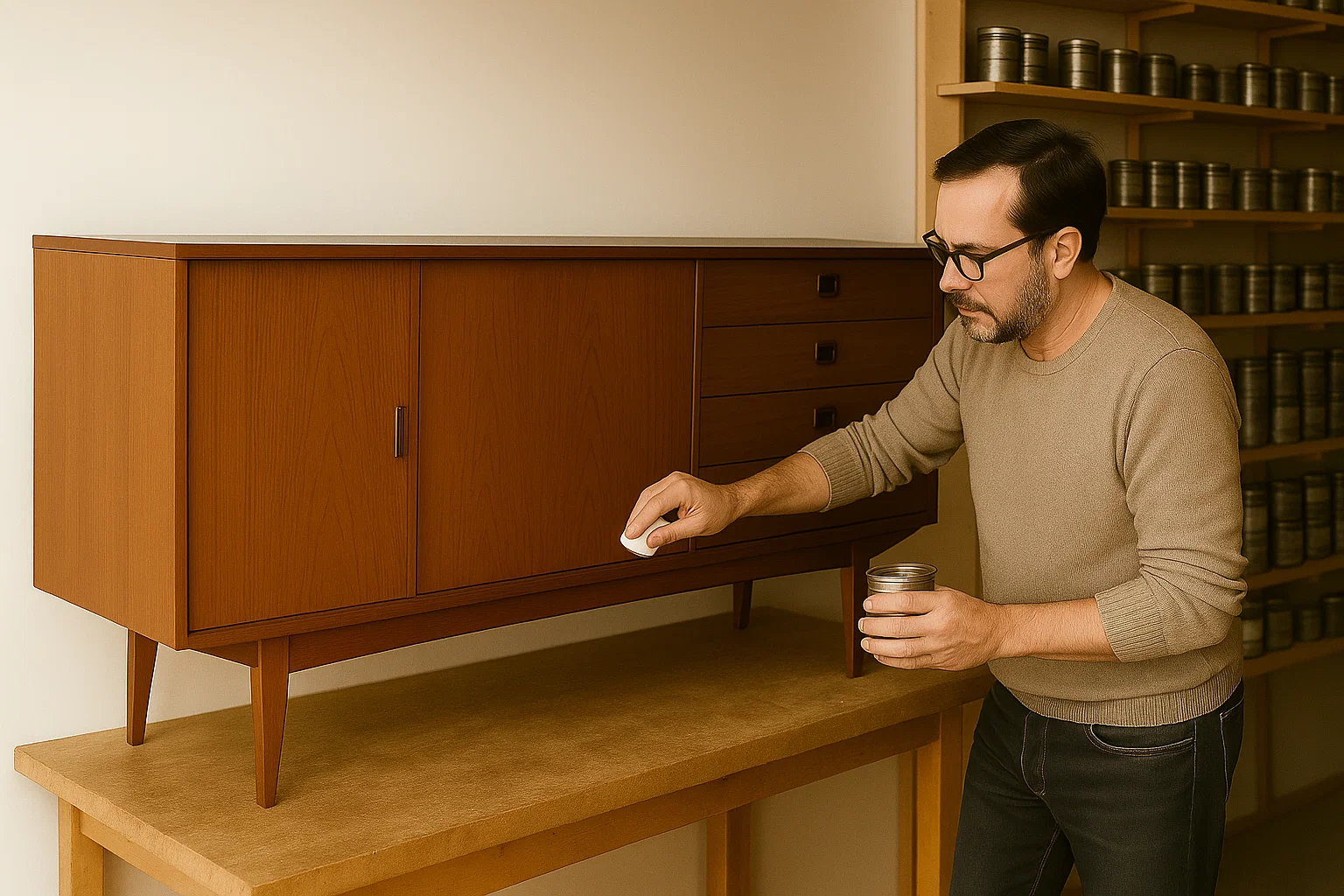
Most experienced Scandinavian furniture restorers draw on a wealth of traditional techniques that are essential to preserving the authenticity of the furniture.
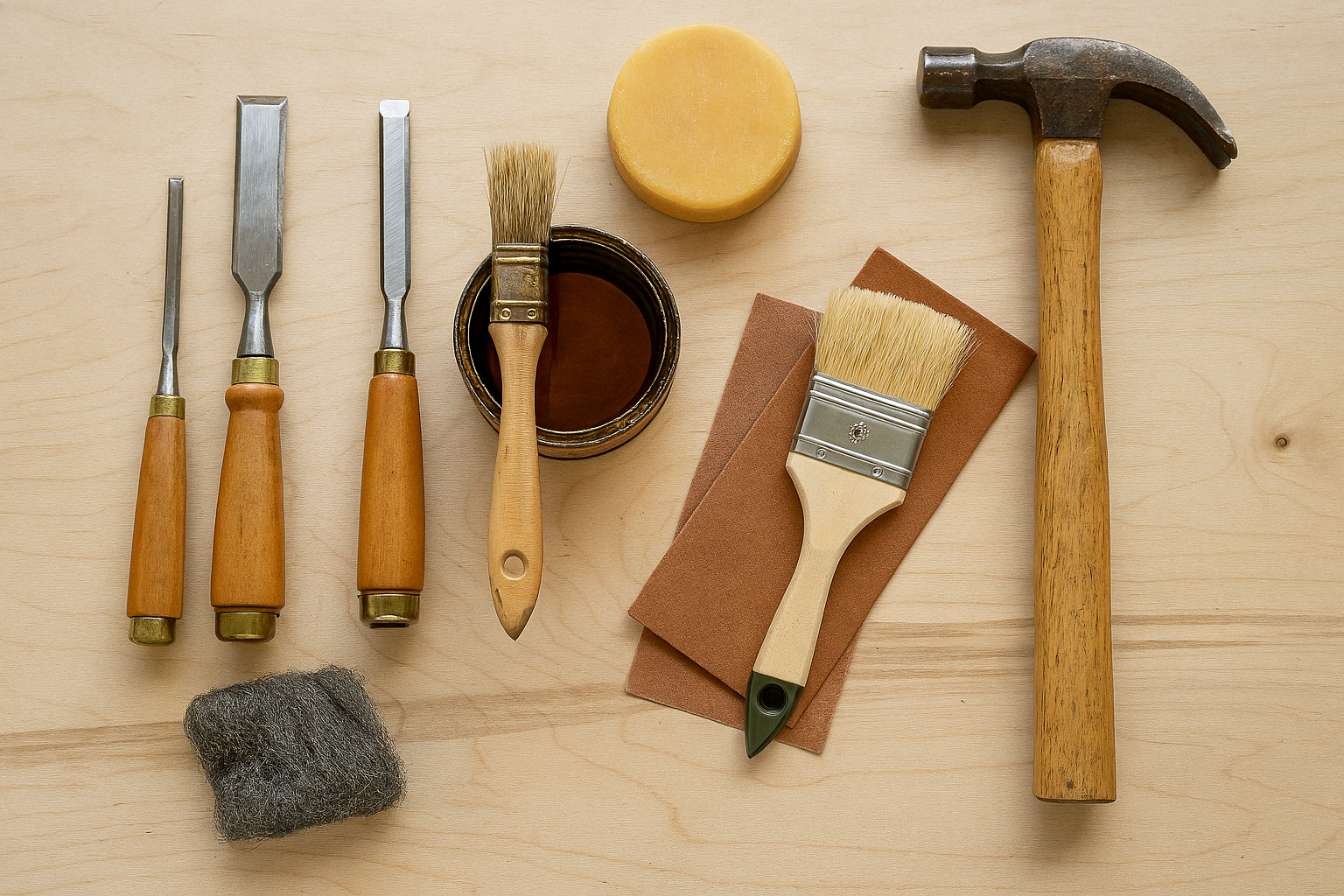
These techniques include the use of natural products such as beeswax, vegetable oils and natural varnishes to protect the wood and enhance its original beauty.
For example, internationally renowned restorers such as those working in Scandinavian countries (Denmark, Sweden, and Norway) apply well-established methods, such as treating wood with linseed oil to protect teak or oak without altering its color.
2. Respect for authenticity and original design
The point on which there is no compromise is the compromise of authenticity.
Those who work with vintage Scandinavian furniture know how important it is to maintain the proportions, minimalist lines, and understated aesthetic that characterize these iconic pieces. Restoration is not so much focused on renovation as it is on the preserve the essence of the furniture.
In addition to the surfaces, the structure of the furniture should also be preserved in its original form, using repair techniques that do not alter the design or proportions.
A conscientious restorer does not distort a vintage piece by replacing, for example, all four tapered wooden legs of a sideboard with brand-new metal hairpin legs.
3. Compatibility and reversibility
A distinguishing feature of quality restoration is compatibility that goes hand in hand with reversibility. Experienced restorers, in fact, use materials compatible with those used in the production of the furniture itself.
The same principle applies in the reconstruction of missing parts Or in the replacement of severely damaged parts. The materials of the repaired parts should, as much as possible, match the original ones.
This principle is fundamental, as it ensures that the restoration can be adapted or corrected over time if future issues arise.
The use of natural glues, waxes or oils ensures that any future interventions will not affect the furniture.
4. Functionality and safety: more than an aesthetic aspect
A piece of Scandinavian furniture, such as a table or chair, must return to being stable and secure, while keeping its original design intact.
Restorers check that structures are sound, that joints are reinforced without damaging the surface, and that every element is in working order to ensure that the furniture can continue to be used without risk for as long as possible.
5. The patina of time: a value to be preserved
Every vintage piece of furniture carries the patina of time, a record of past histories that lends uniqueness to the piece. Quality restoration knows how to enhancing this patina, without covering it up or removing it.
For example, a Scandinavian bookcase that has lived through decades of history may show signs of wear and tear or small cracks, but these should not be considered defects. Rather, they should be treated with respect so that the furniture continues to tell its story.
This patina can be preserved by gentle techniques of cleaning and treatment, keeping the soul of the furniture intact.
Conversely, overly aggressive treatments risk covering and hiding the true character of the piece.
How to check the quality of a restoration
If you are considering buying a restored Scandinavian piece of furniture, here is a list of things to check to investigate the quality of the restoration.
- Doubt the too-perfect pieces: not always an object without a single defect corresponds to a well-restored piece. More likely the restoration was invasive and radical.
- Check the details of the restoration: ask about the materials used and what work was done.
- Check the original appearance: The furniture should maintain its natural and recognizable appearance, without overly intrusive treatments.
- Examine the patina: The original patina should be preserved and not covered by overly glossy paints or obsolete finishes.
With these simple steps, buying a restored vintage piece of furniture becomes an informed choice that will allow you to bring home not only a beautiful piece of furniture, but also a story that blends seamlessly into your space.